In 1953 thirteen-year-old Mei Lin is at home. The old clerk teaches her book-keeping in the afternoons, and she reads everything she can find, much of it in secret. She is not set to regular work. In coronation year the family goes to the cinema to see the crowning on film and has a portrait taken in a studio. The police searches go on, and a neighbour's son is questioned. Tan Cheng Huat's firm does not grow, a large customer's debt goes bad, and the clan association lends again. Lim Swee Neo loses money a second time, in a savings club that collapses. Husband and wife stay close. Nobody in the family is seriously ill.
A work of fiction set in real history. The characters are invented; the historical events are real and sourced.
In 1952 twelve-year-old Mei Lin wins a prize in her last year of primary school, and her parents take her out of school at the end of it. It is a frightening year for schools, with searches and detentions of older students, and her father decides a girl of twelve is better at home. A good doctor finds that she needs spectacles. The firm holds steady through the slump with a loan on easy terms from the clan association. Lim Swee Neo takes on more of its running and grows stronger, though a loan she made to a friend from her own savings is lost. The parents are close again after the year before. Nobody in the family is seriously ill.

the daughter of the house, out of school and at home

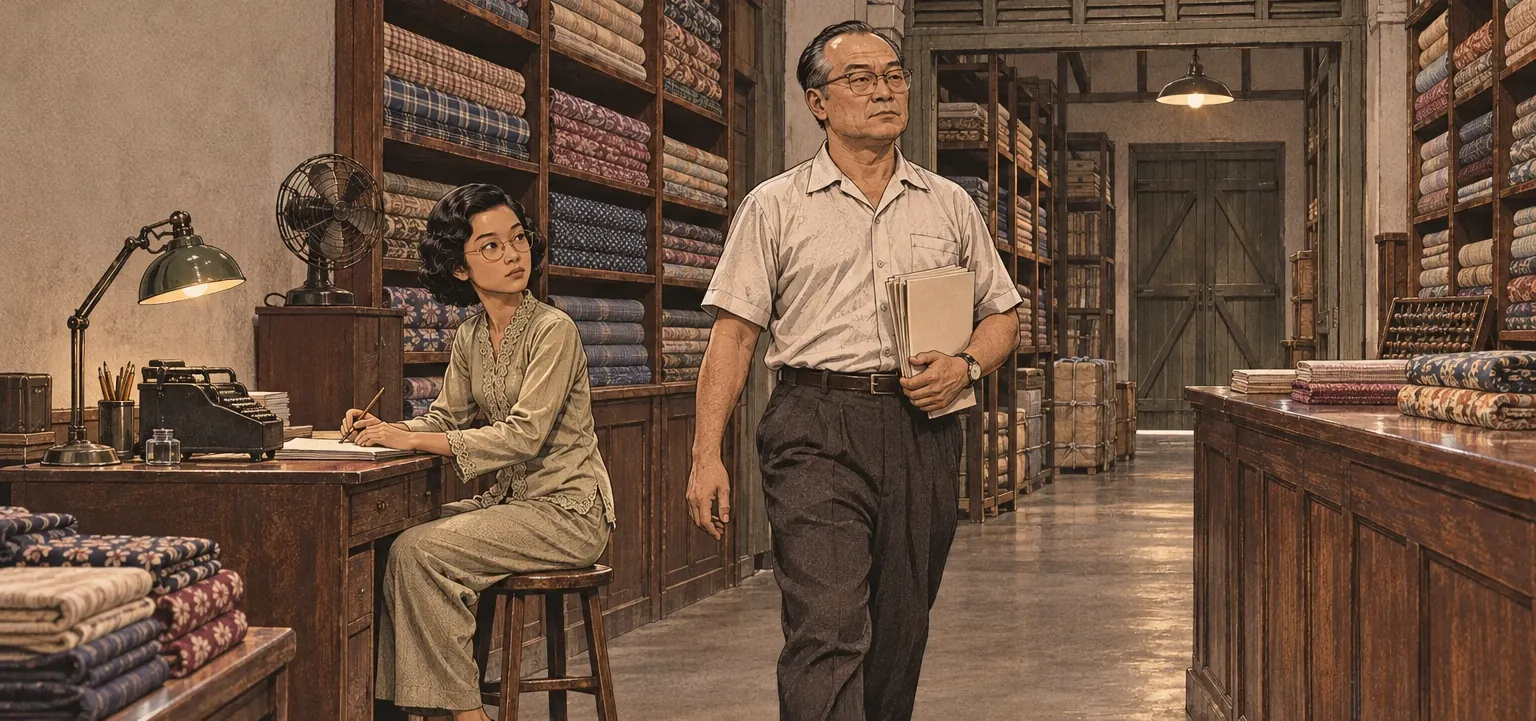
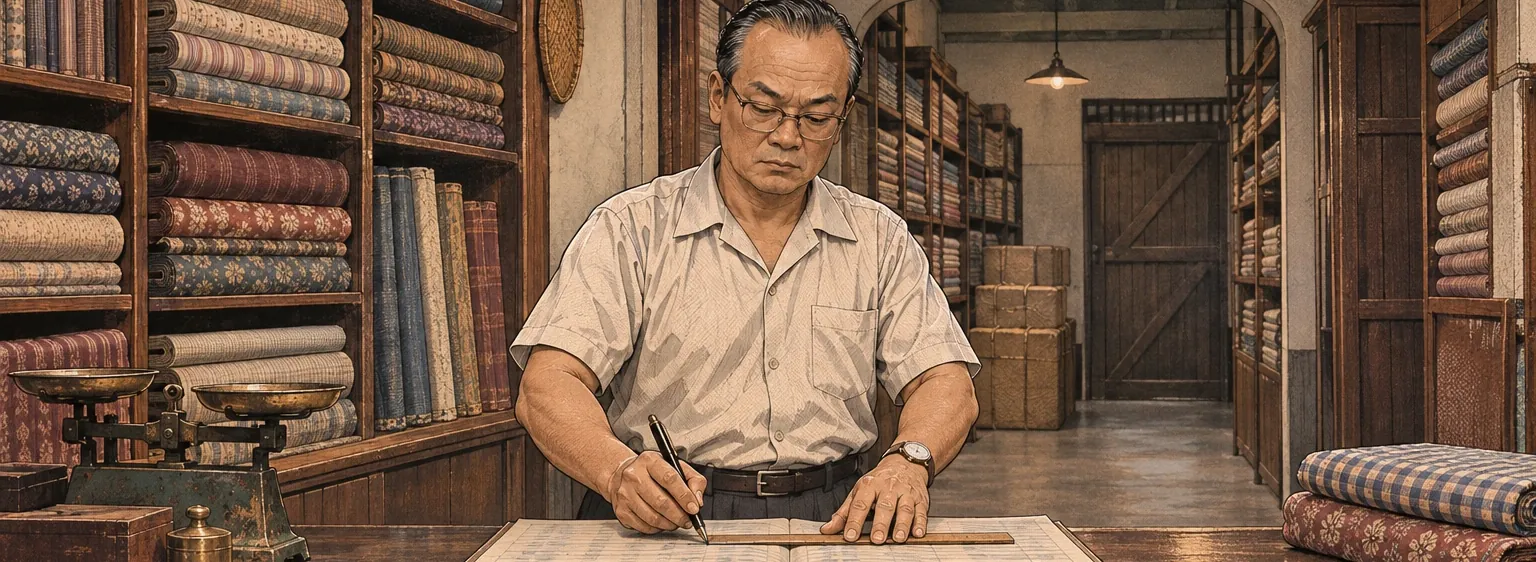
her father, a cloth merchant
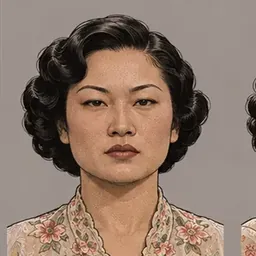
her mother, who keeps the firm's books

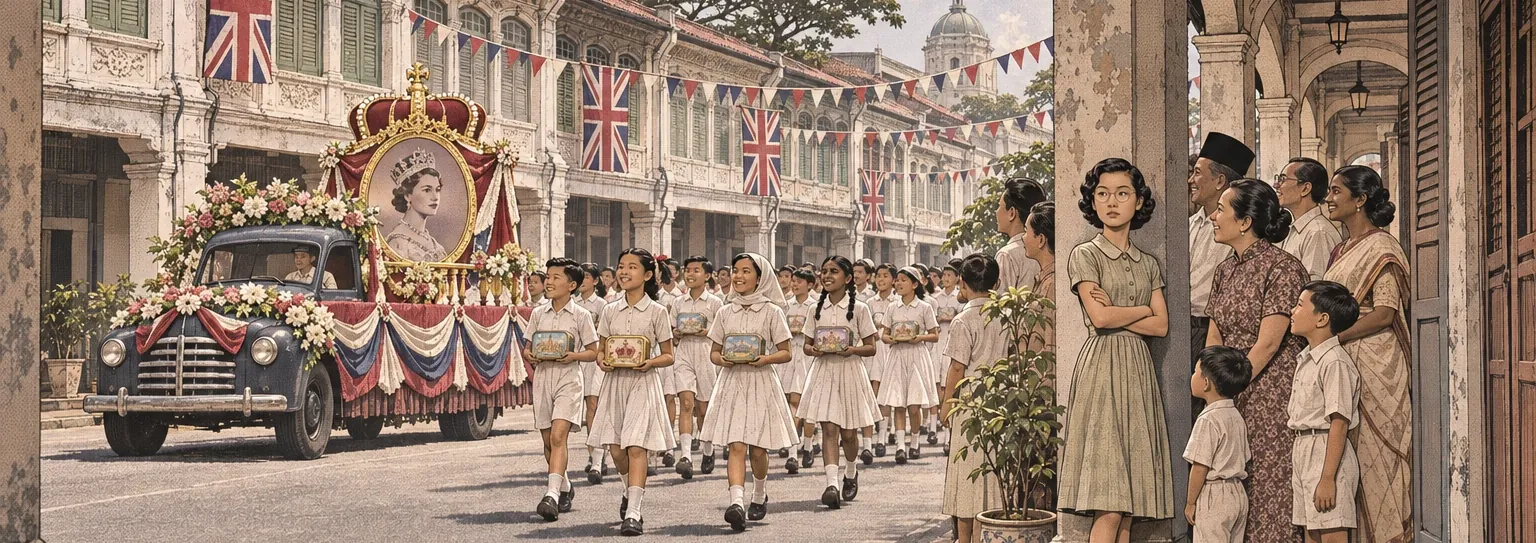




Singapore in 1953 is a Crown Colony. Elizabeth II is crowned on 2 June; Singapore celebrates with processions, illuminations, a coronation parade and gifts for schoolchildren.
Behind the dice How likely was each thing that happened? (Spoilers)
Nothing in The Dice Decides is chosen by a writer. Each person's year is a set of rolls, weighted by their stats and their times; the story is written afterwards to fit what the dice decided.
| Who | What the dice decided | Result | Chance |
|---|---|---|---|
| Tan Mei Lin | Book-keeping with the old clerk. | firm learning | 17% |
| Tan Mei Lin | The coronation film at the Cathay and the studio portrait. | outing | 14% |
| Tan Cheng Huat | The clan association lends again, on easy terms. | kin loan | 15% |
| Lim Swee Neo | The savings club collapses; four months' contributions lost. | venture sours | 4% |
| Tan Cheng Huat | The Geylang draper's debt is written off. | yes | 14% |
| Tan Mei Lin | She reads everything, some of it in secret. | reads everything | 20% |
| Tan Mei Lin | A neighbour's son is taken for questioning. | emergency | 11% |
| Tan Cheng Huat | The firm does what it did in 1952 and no more. | no | 51% |
| Lim Swee Neo | She keeps the books three mornings a week, as before. | no | 49% |
| Tan Mei Lin | Lessons, not work; nobody pays her. | none | 26% |
| Tan Cheng Huat | Both lost money, and nobody was blamed. | closeness | 11% |
| Lim Swee Neo | Closer than since the early years of the marriage. | closeness | 5% |
| Tan Mei Lin | No serious illness for Mei Lin. | no | 99% |
| Tan Mei Lin | The house is not pinched this year. | no | 91% |
| Tan Mei Lin | Mei Lin survives the year. | no | over 99% |
| Tan Cheng Huat | No serious illness for Cheng Huat. | no | 97% |
| Tan Cheng Huat | Cheng Huat survives the year. | no | over 99% |
| Lim Swee Neo | No serious illness for Swee Neo. | no | 96% |
| Lim Swee Neo | Swee Neo survives the year. | no | over 99% |
Chances are the simulation's model assumptions, not historical statistics.
Show as a table
| Year | Household a month | Peer median | Multiple |
|---|---|---|---|
| 1941 | $504 | $42 | 12.0× |
| 1942 | $82 | $42 | 2.0× |
| 1943 | $148 | $42 | 3.5× |
| 1944 | $204 | $42 | 4.9× |
| 1945 | $815 | $120 | 6.8× |
| 1946 | $1,114 | $150 | 7.4× |
| 1947 | $1,094 | $155 | 7.1× |
| 1948 | $1,072 | $160 | 6.7× |
| 1949 | $1,051 | $165 | 6.4× |
| 1950 | $1,691 | $170 | 9.9× |
| 1951 | $1,753 | $175 | 10.0× |
| 1952 | $1,901 | $180 | 10.6× |
| 1953 | $1,841 | $185 | 10.0× |
Nominal dollars; the engine's model estimate, the same figure as each issue's money line.
The chapter in prose
1953: Book-keeping
In 1953 thirteen-year-old Mei Lin is at home. The old clerk teaches her book-keeping in the afternoons, and she reads everything she can find, much of it in secret. She is not set to regular work. In coronation year the family goes to the cinema to see the crowning on film and has a portrait taken in a studio. The police searches go on, and a neighbour's son is questioned. Tan Cheng Huat's firm does not grow, a large customer's debt goes bad, and the clan association lends again. Lim Swee Neo loses money a second time, in a savings club that collapses. Husband and wife stay close. Nobody in the family is seriously ill.
Book-keeping
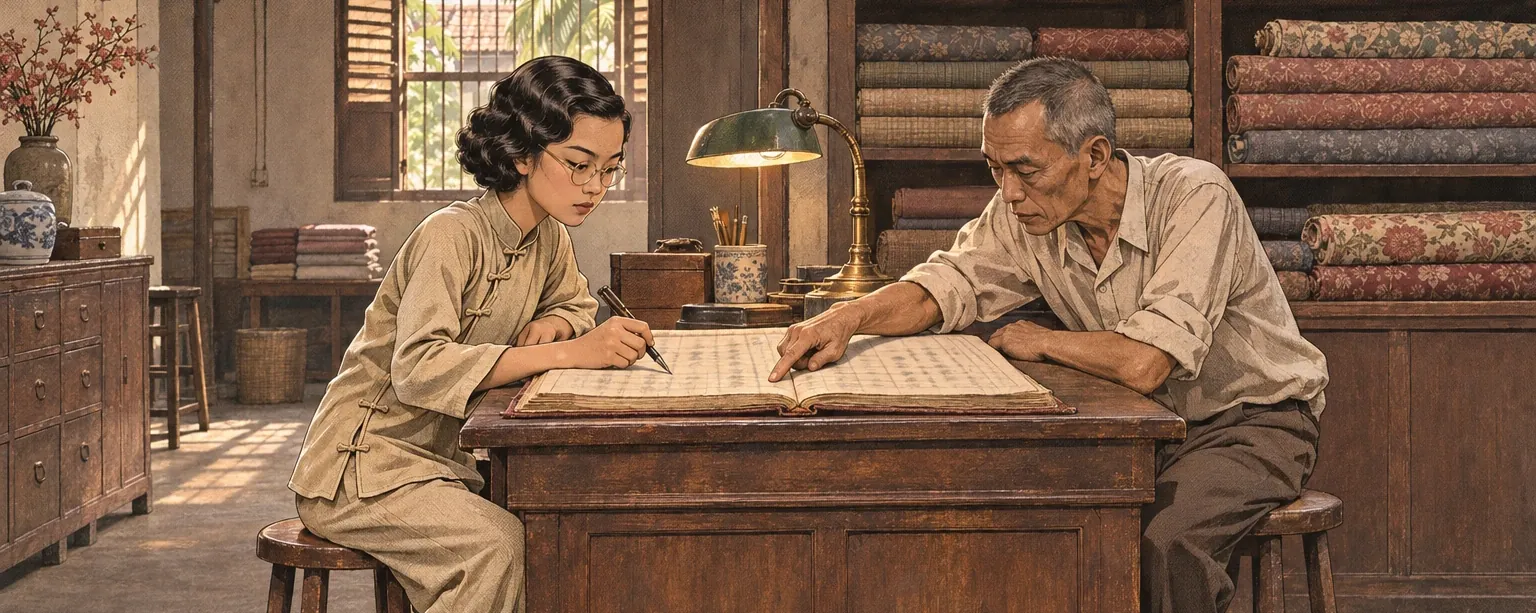
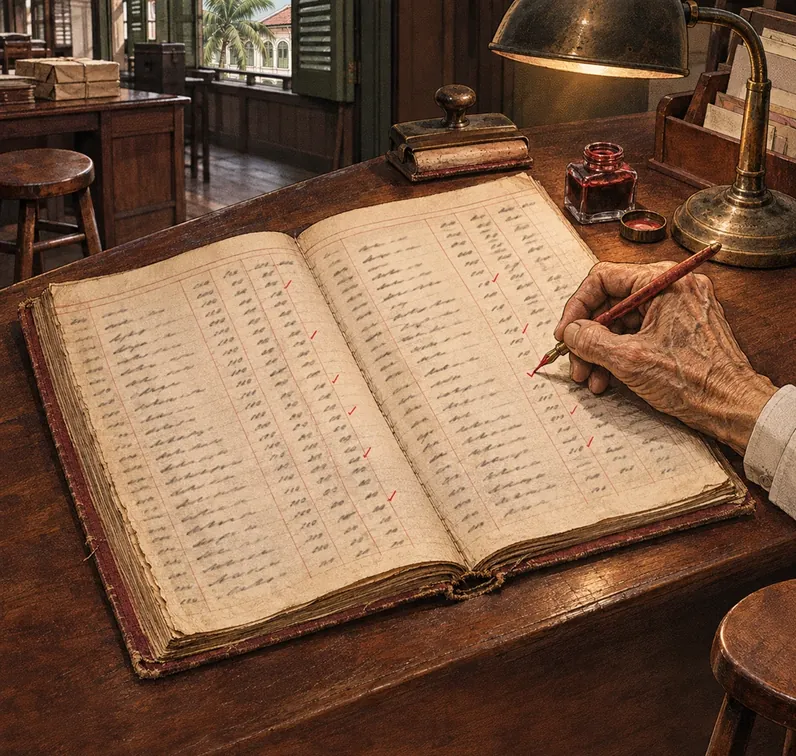
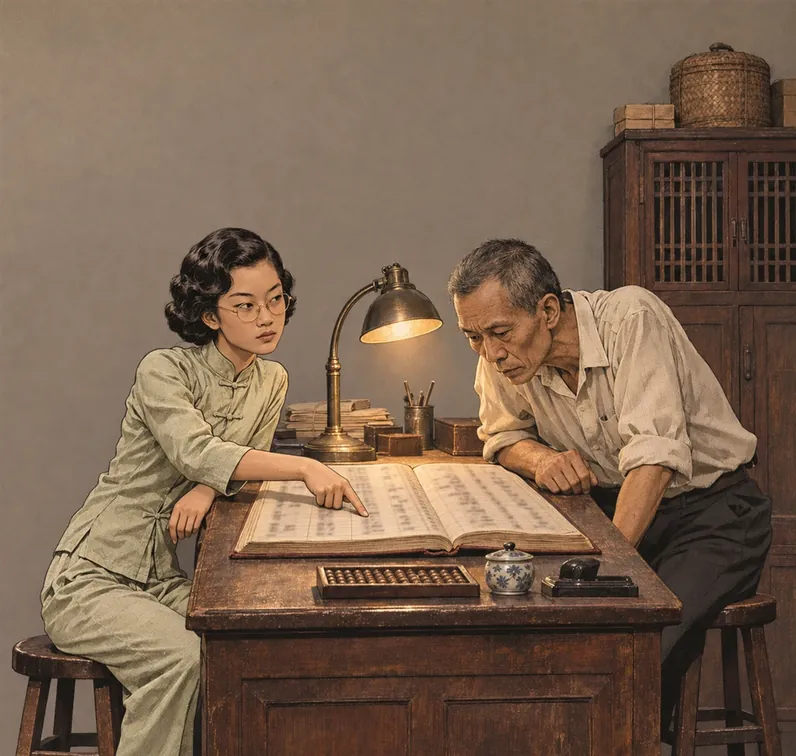
The old clerk had no children, and had never taught anyone anything, and he took to it as if he had been waiting. Three afternoons a week Mei Lin walked to the firm after her mother had gone home and sat with him at the high desk at the back, and he taught her book-keeping the way he had learned it from a Hokkien merchant in 1919: the day book, the ledger, the trial balance, the difference between what a man owes and what he says he owes. He corrected her figures in red ink without comment. When she found a mistake of his, in a column he had added in March, he looked at it for a long time and then thanked her.
It was lessons, not work. She was not put at the counter and nobody paid her. Her father, when he passed the desk, did not stop.
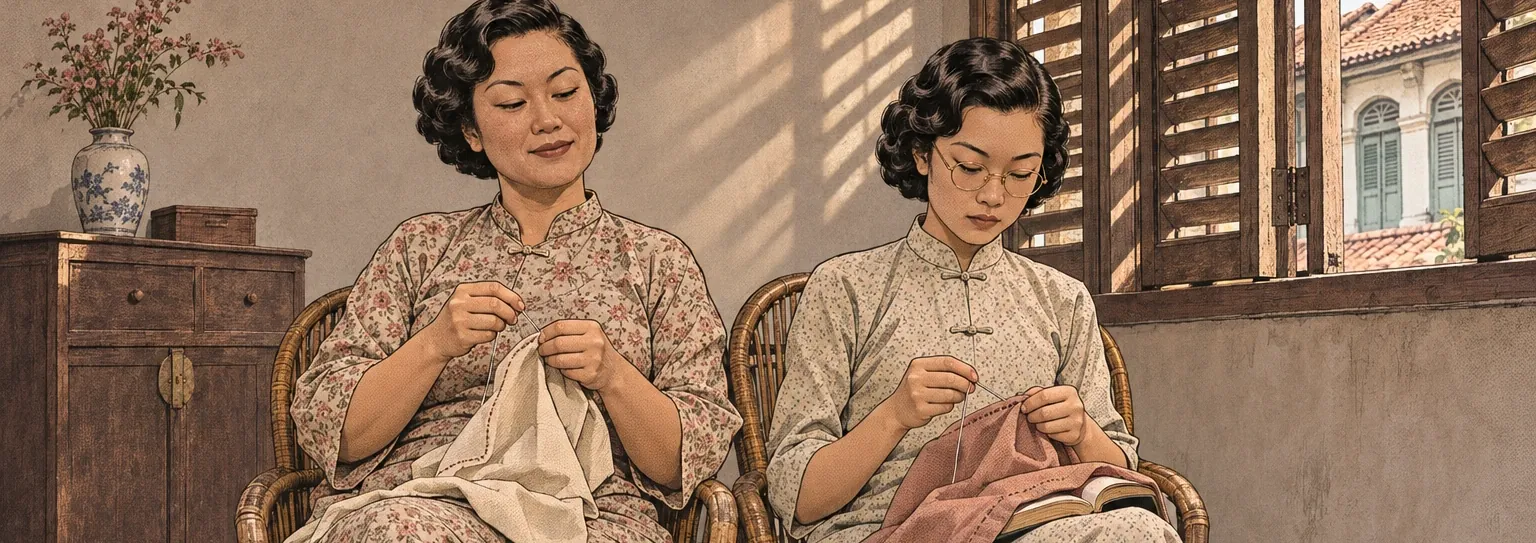
The rest of the time was her own, and she spent it reading. She read the encyclopaedias to the end. She read the newspapers after her father had finished with them, and the novels the servant's niece lent the servant, and a book on the history of the Straits Settlements that she found in a box in the godown and kept under her mattress. Her mother set her to sewing in the mornings, and she sewed with a book open on her knee under the cloth, and her mother knew, and let it go.
A Queen Is Crowned
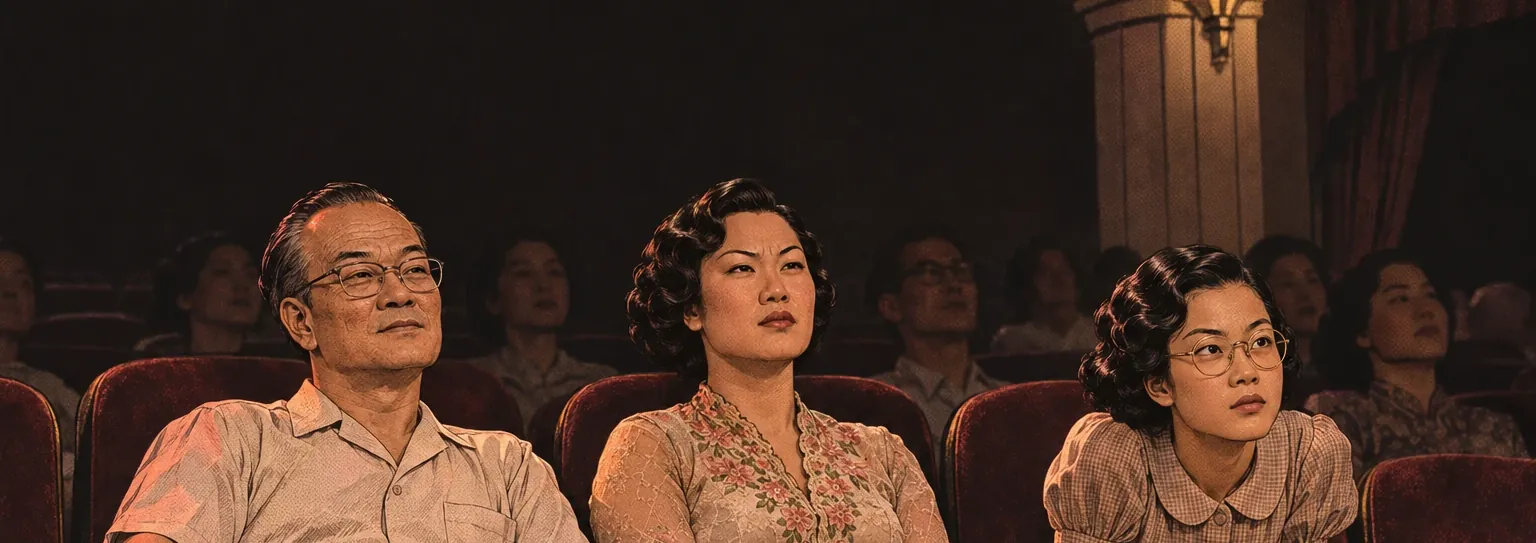
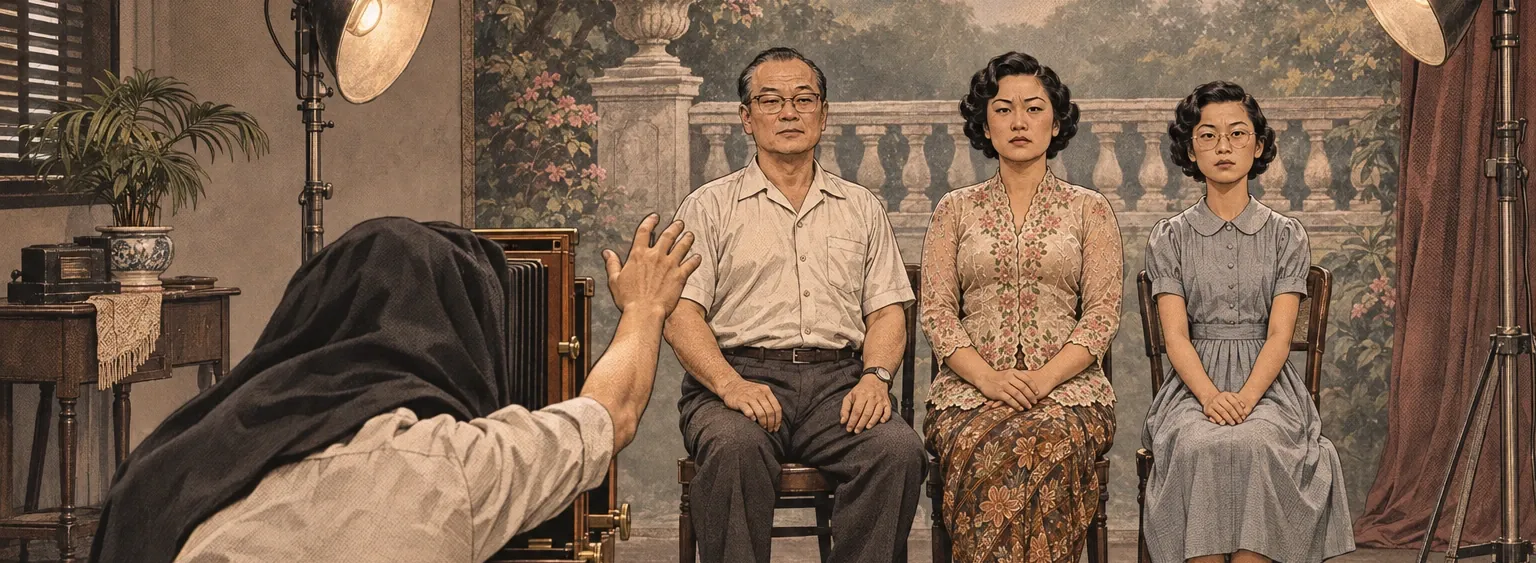
In June the Queen was crowned in London, and Singapore lit the harbour and hung the streets with flags. There was a parade, and floats, and schoolchildren were given medals and tins of sweets, which Mei Lin did not get, because she was not a schoolchild. Later in the summer the film of the coronation came to the Cathay, in colour, and her father took the three of them, in the good seats upstairs. Afterwards they went to a studio in High Street and had a portrait made, the first since before the war.
The same summer the police came to the street. They went to the house of a family four doors down whose son was in the upper classes of a Chinese middle school, and took him away for questioning, and brought him back two days later. Nobody said what he had been asked. His mother stopped coming to the market. Mei Lin's father, who had said nothing about the schools since the year before, said at dinner that night that he had been right, and nobody answered him.
The Savings Club
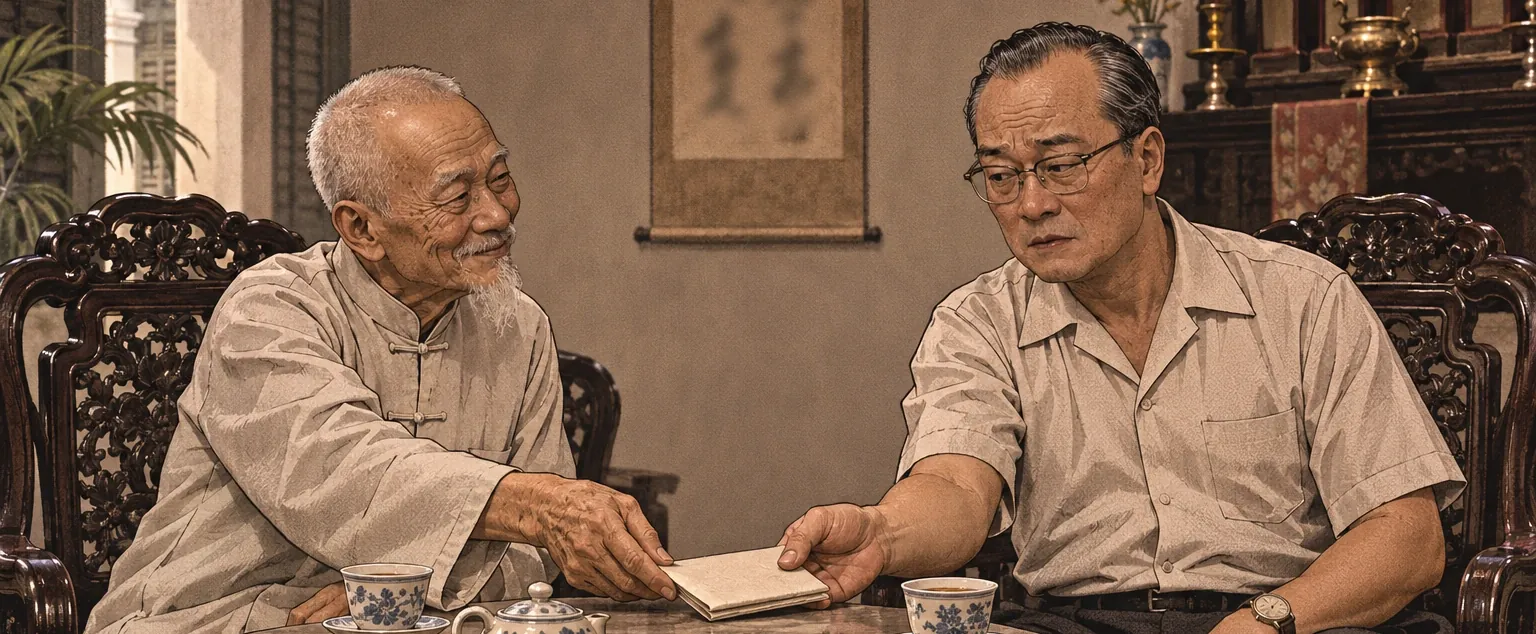
Trade picked up in the town that year, but not at the firm, which did what it had done in 1952 and no more. In April a draper in Geylang who had taken cloth on credit for six years closed his shop owing them a sum that Cheng Huat wrote in the ledger and then, in October, wrote off. The clan association lent again, on the same easy terms, to cover the gap. Cheng Huat was beginning to dislike how easy the terms were.
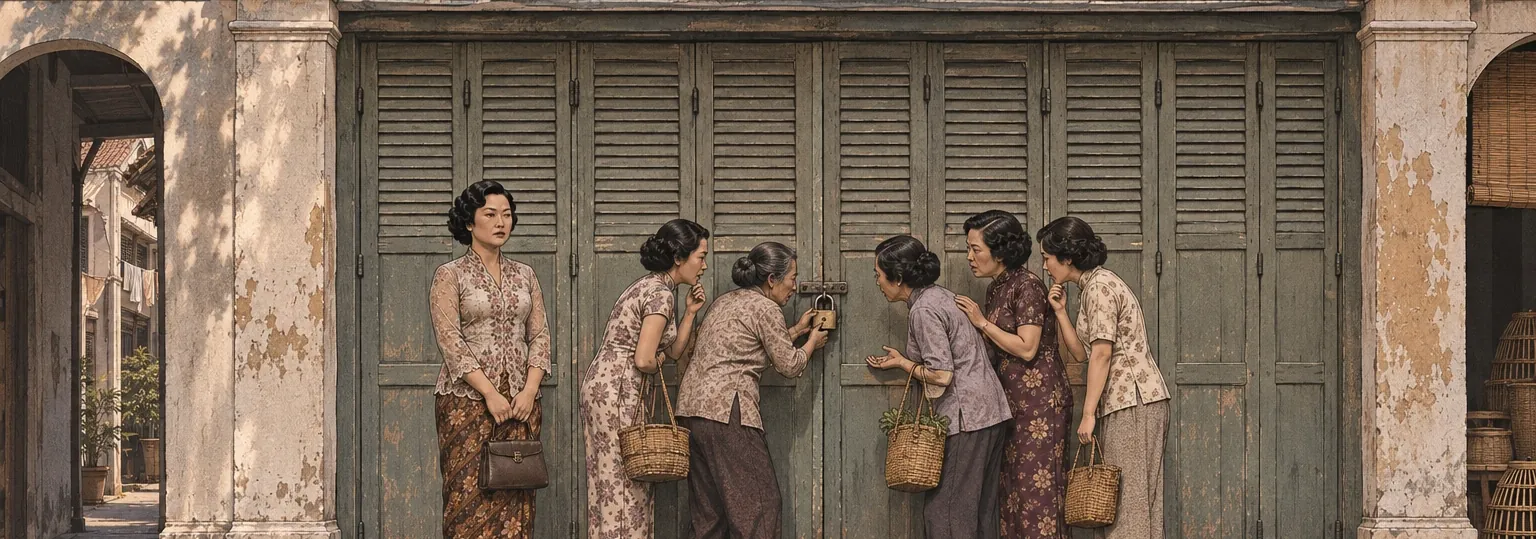
Swee Neo kept the books three mornings a week, as before. Her own money went wrong for the second year running. She had been paying into a women's savings club run by a goldsmith's wife in South Bridge Road, a tontine of the kind half the women she knew belonged to, and in August the goldsmith's wife went to Johore and did not come back. Swee Neo was owed four months' contributions. She told her husband, which she had not done about the coffee shop loan, and he did not reproach her. He said that he had lost more than that to the draper.
They were close that year, closer than they had been since the early years of the marriage. It was not anything in particular. They had both lost money, and both said so, and nobody had been blamed.
In the studio portrait the three of them sit very upright against a painted balustrade, and only Mei Lin, in her gold spectacles, is looking not at the camera but slightly to one side of it, as if at something the photographer had not noticed.