In 1952 twelve-year-old Mei Lin wins a prize in her last year of primary school, and her parents take her out of school at the end of it. It is a frightening year for schools, with searches and detentions of older students, and her father decides a girl of twelve is better at home. A good doctor finds that she needs spectacles. The firm holds steady through the slump with a loan on easy terms from the clan association. Lim Swee Neo takes on more of its running and grows stronger, though a loan she made to a friend from her own savings is lost. The parents are close again after the year before. Nobody in the family is seriously ill.
A work of fiction set in real history. The characters are invented; the historical events are real and sourced.
In 1951 the boom carries Tan Cheng Huat's firm through the spring and then breaks under him. He is caught holding cloth bought at the top of the market, and the year's gains go into the loss. Relatives keep coming to ask for money, and the losses and the giving lead to a hard quarrel at home. Lim Swee Neo starts keeping the firm's books with the old clerk, and keeps seeing the doctor. Eleven-year-old Mei Lin finds her feet at the girls' school and comes first in arithmetic at the year's end, though the other girls pass round a rumour about where her family's money came from. In September Singapore is made a city. Nobody in the family is seriously ill.

the child of the house, in her last year of primary school
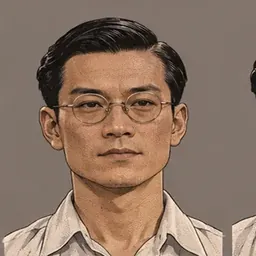
her father, a cloth merchant
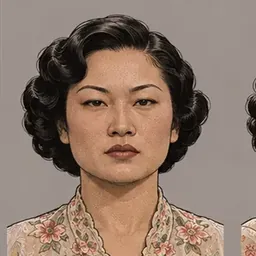
her mother, now working in the firm
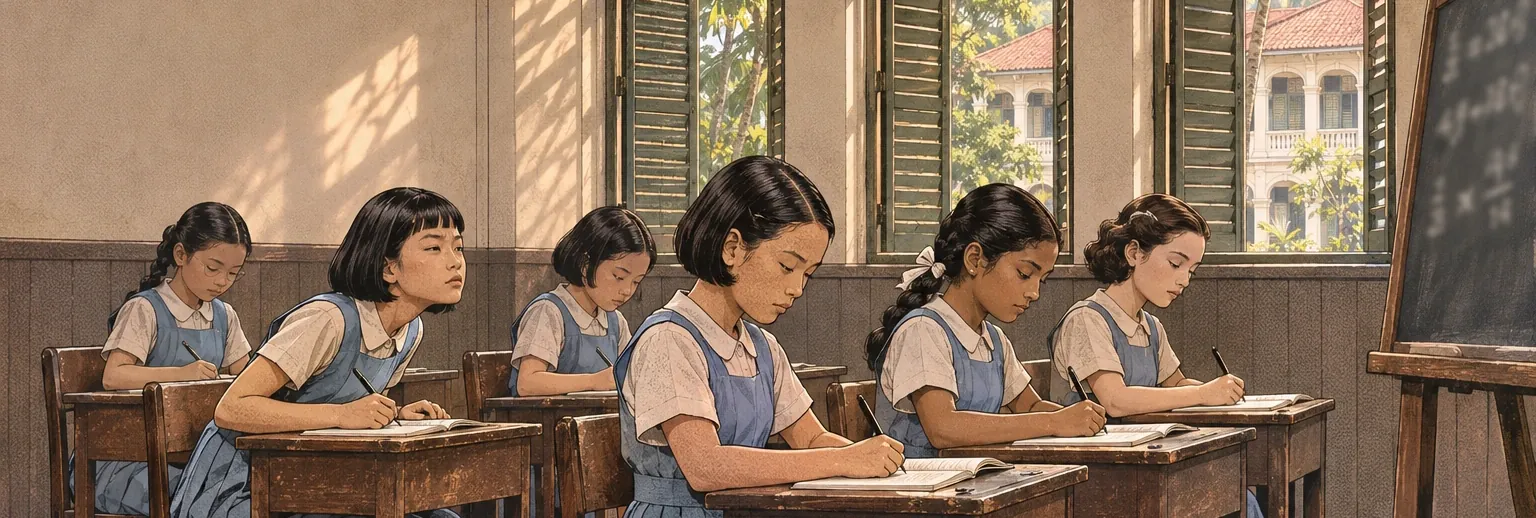


Singapore in 1952 is a Crown Colony. King George VI dies on 6 February and Elizabeth II accedes; there is official mourning, and the coronation follows in 1953.
Behind the dice How likely was each thing that happened? (Spoilers)
Nothing in The Dice Decides is chosen by a writer. Each person's year is a set of rolls, weighted by their stats and their times; the story is written afterwards to fit what the dice decided.
| Who | What the dice decided | Result | Chance |
|---|---|---|---|
| Tan Mei Lin | The green prize book at speech day. | prize | 9% |
| Tan Mei Lin | Taken out of school at the end of primary. | no | 7% |
| Tan Mei Lin | The doctor finds she needs spectacles. | good doctor | 25% |
| Tan Cheng Huat | The clan association lends on easy terms. | kin loan | 15% |
| Lim Swee Neo | She takes on more of the running of the firm. | yes | 51% |
| Lim Swee Neo | Her loan to a friend is lost when the coffee shop closes. | venture sours | 4% |
| Tan Mei Lin | Searches and detentions in the Chinese schools. | emergency | 11% |
| Tan Mei Lin | No other mark at school beyond the prize. | no | 31% |
| Tan Mei Lin | She is not set to work this year. | none | 79% |
| Tan Cheng Huat | The firm holds steady and does not grow. | no | 52% |
| Tan Cheng Huat | No customer goes bad in the slump. | no | 81% |
| Tan Mei Lin | The saucer on the stairs. | kindness | 5% |
| Tan Cheng Huat | Evenings on the veranda. | closeness | 11% |
| Lim Swee Neo | Stronger than at any time since the war. | recovering | 13% |
| Tan Mei Lin | No serious illness for Mei Lin. | no | 99% |
| Tan Mei Lin | The house is not pinched this year. | no | 91% |
| Tan Mei Lin | Mei Lin survives the year. | no | over 99% |
| Tan Cheng Huat | No serious illness for Cheng Huat. | no | 97% |
| Tan Cheng Huat | Cheng Huat survives the year. | no | over 99% |
| Lim Swee Neo | No serious illness for Swee Neo. | no | 96% |
| Lim Swee Neo | Swee Neo survives the year. | no | over 99% |
Chances are the simulation's model assumptions, not historical statistics.
Show as a table
| Year | Household a month | Peer median | Multiple |
|---|---|---|---|
| 1941 | $504 | $42 | 12.0× |
| 1942 | $82 | $42 | 2.0× |
| 1943 | $148 | $42 | 3.5× |
| 1944 | $204 | $42 | 4.9× |
| 1945 | $815 | $120 | 6.8× |
| 1946 | $1,114 | $150 | 7.4× |
| 1947 | $1,094 | $155 | 7.1× |
| 1948 | $1,072 | $160 | 6.7× |
| 1949 | $1,051 | $165 | 6.4× |
| 1950 | $1,691 | $170 | 9.9× |
| 1951 | $1,753 | $175 | 10.0× |
| 1952 | $1,901 | $180 | 10.6× |
Nominal dollars; the engine's model estimate, the same figure as each issue's money line.
The chapter in prose
1952: The Prize
In 1952 twelve-year-old Mei Lin wins a prize in her last year of primary school, and her parents take her out of school at the end of it. It is a frightening year for schools, with searches and detentions of older students, and her father decides a girl of twelve is better at home. A good doctor finds that she needs spectacles. The firm holds steady through the slump with a loan on easy terms from the clan association. Lim Swee Neo takes on more of its running and grows stronger, though a loan she made to a friend from her own savings is lost. The parents are close again after the year before. Nobody in the family is seriously ill.
The Prize
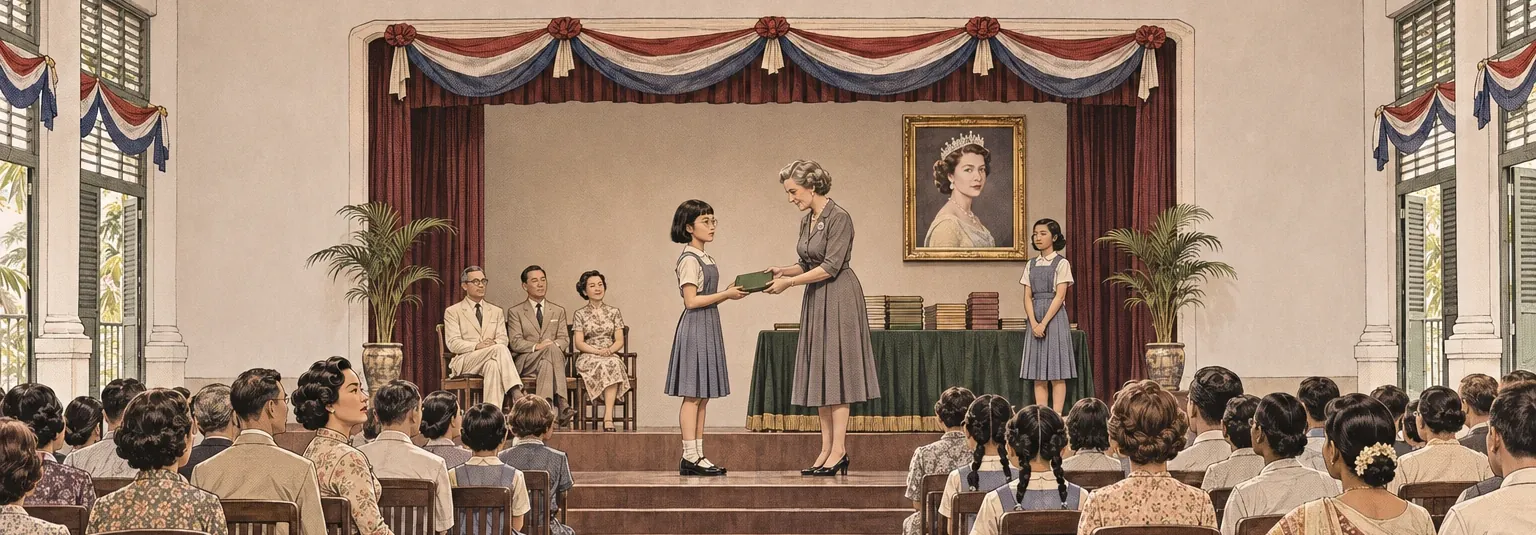
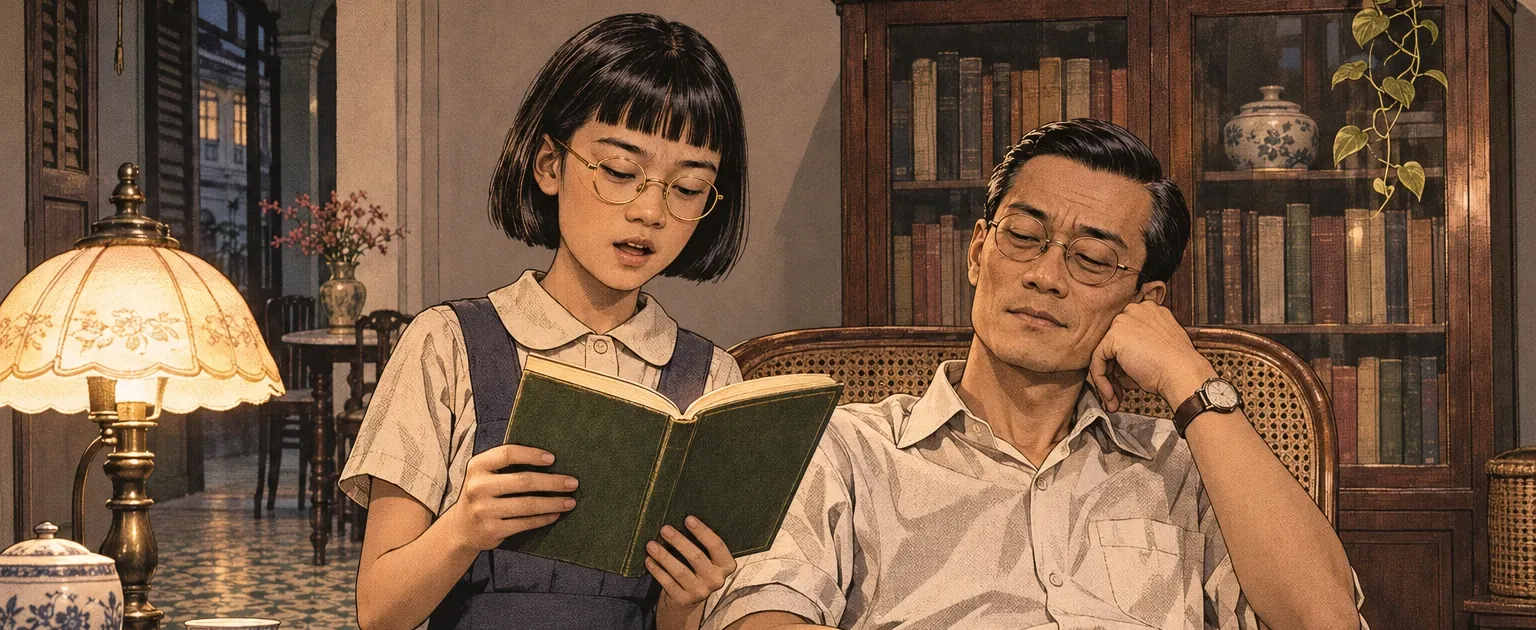
In her last year at the girls' school she won a prize. It was given in November, at the speech day, in a hall hung with bunting and a new portrait of the young Queen: a book bound in green cloth with the school's crest stamped on the front and her name written inside in the headmistress's hand. Her mother came, in her best samfoo, and sat very straight. Her father could not leave the firm, and asked her to read him the inscription twice when she got home.
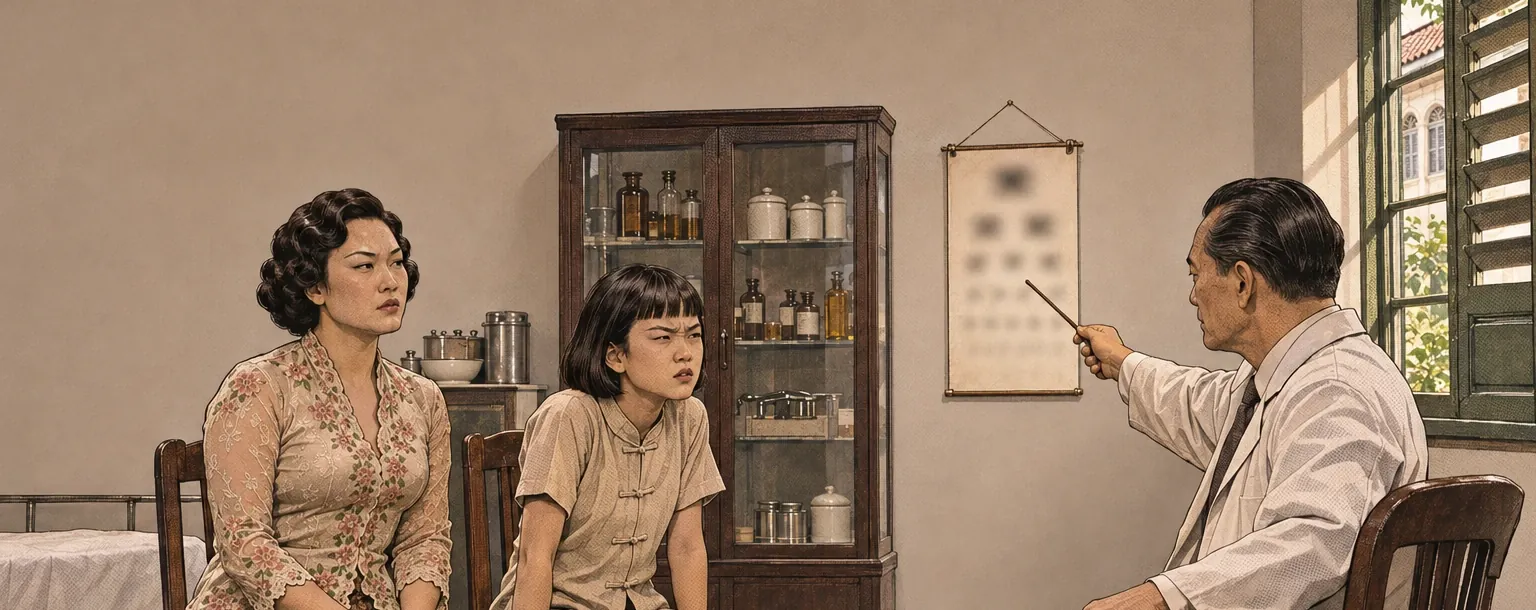
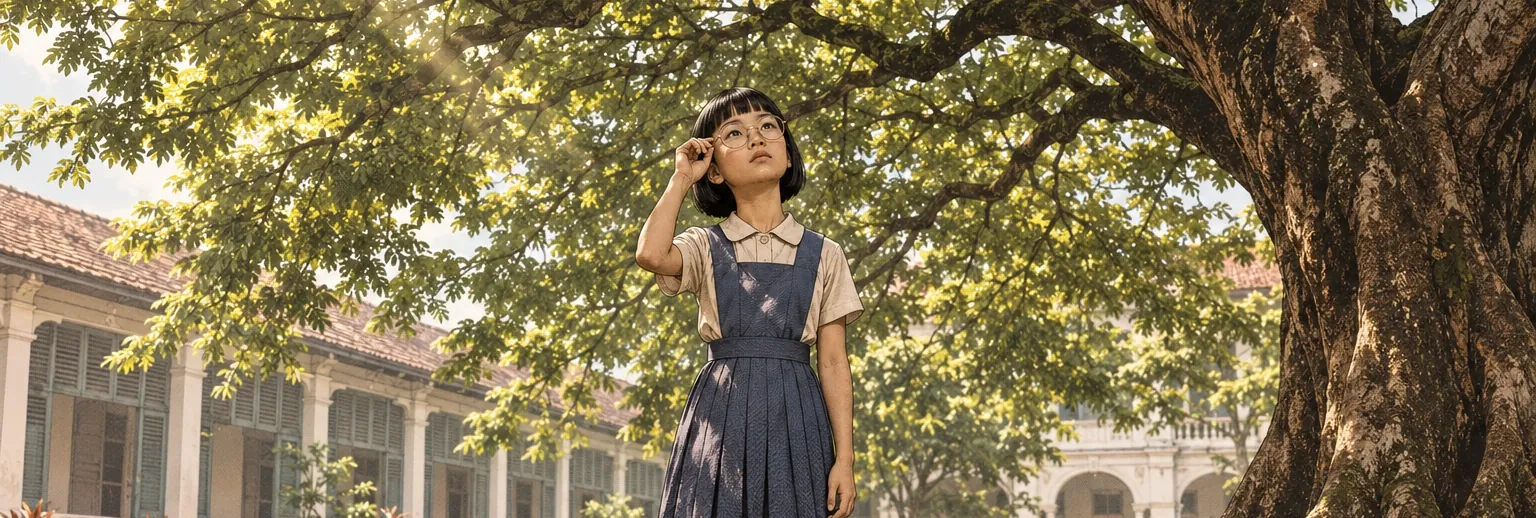
The reading had been getting harder all year, and she had not said so. It was the doctor in town who found it, when her mother took her for a cough in the spring: he held up a card across the room and she could not read the bottom lines. By the end of the month she had spectacles in thin gold frames. She saw the leaves on the tree outside the classroom, separately, for what she thought was the first time.
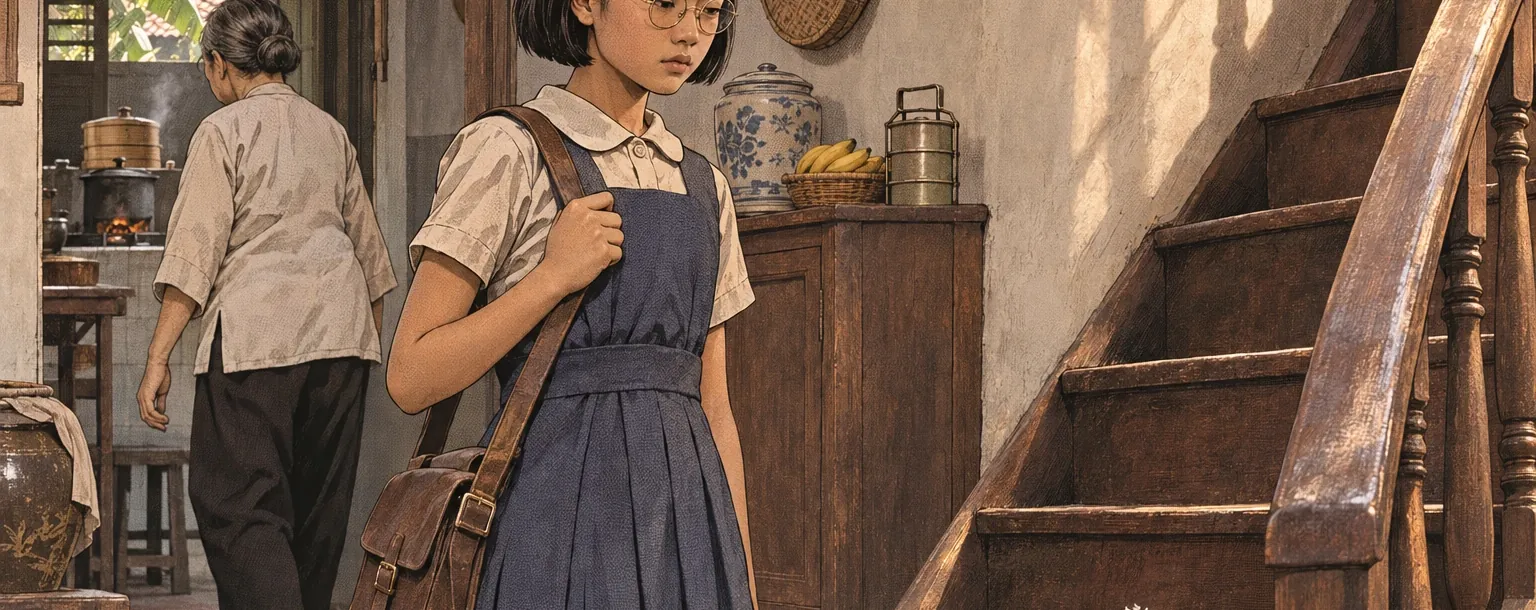
That year the kindest person in the house was the old servant, who had never had much to say to her. She began, without being asked, to keep back the best of whatever was cooked and leave it on a saucer on the stairs for when Mei Lin came in from school.
Home
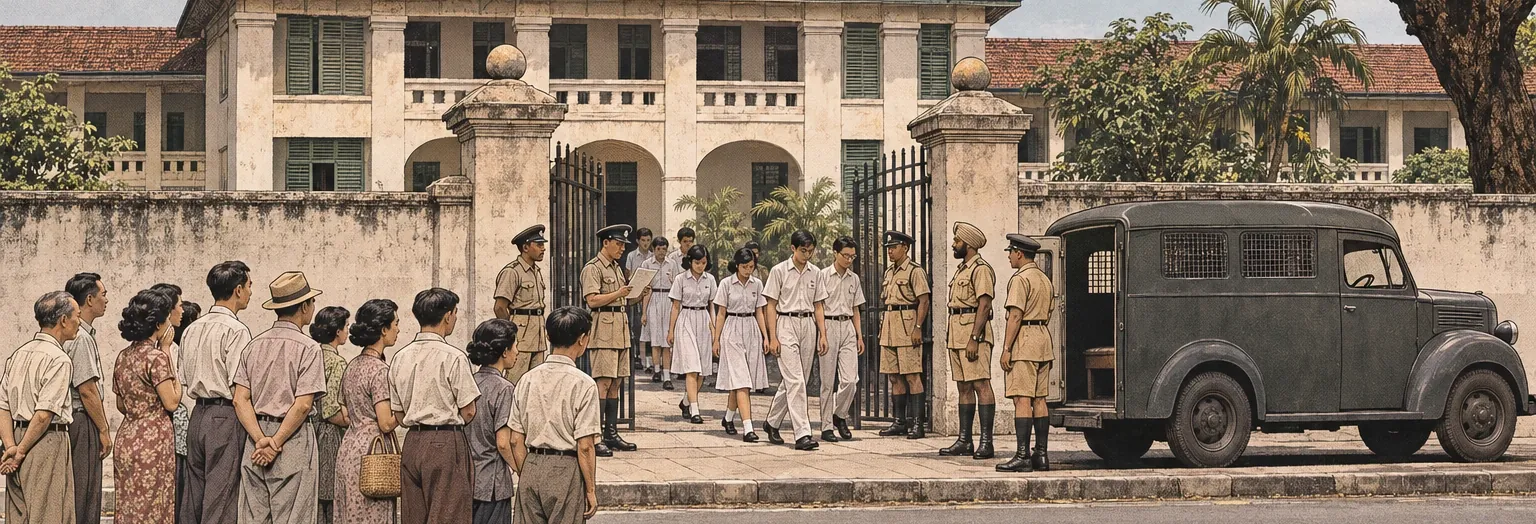
It was a bad year to be a schoolchild in Singapore, or to be the parent of one. The police went into the Chinese middle schools that year with lists, and older boys and girls were taken away for questioning, and some did not come back to their classes. The papers printed the numbers. In the shops men said that the schools were full of Communists and that no decent family let a child near them, and other men said that the police were the trouble, and both lowered their voices when a stranger came in.
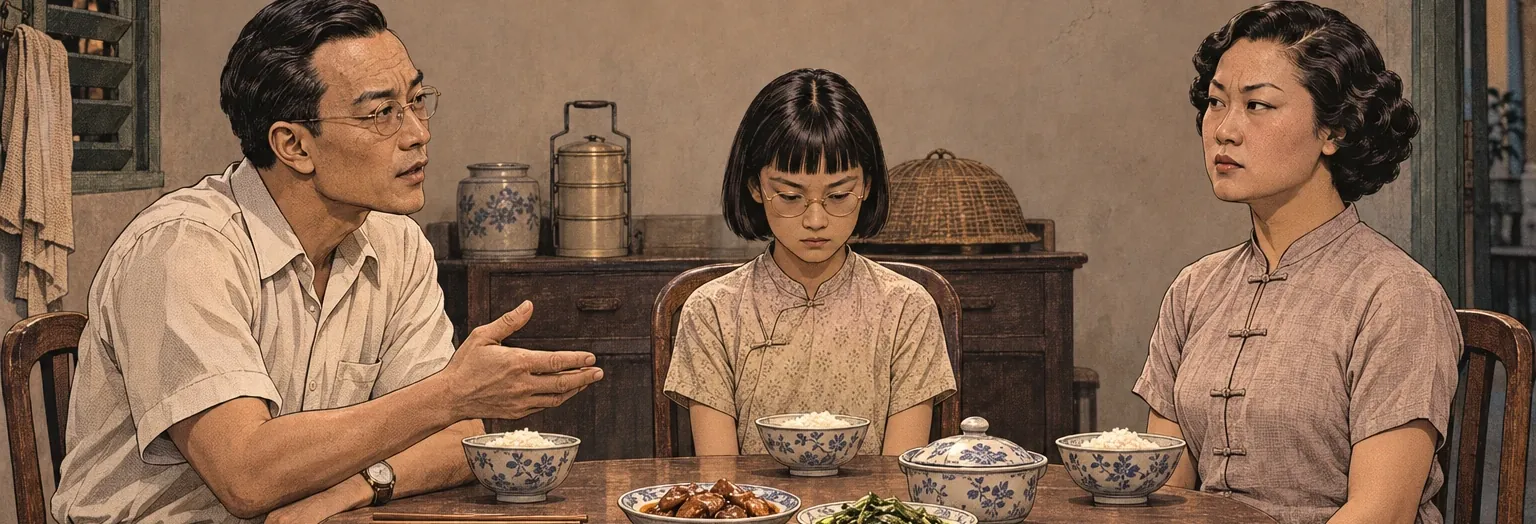
Her school was not one of those schools. But her father had stood on a school ground once himself, in 1942, and on that subject he did not reason. Some time in the autumn he said, at the table, that she had had schooling enough for a girl, more than her mother had had, and that she would stay at home after the end of the year and learn the household and the firm. A girl of twelve was nearly grown. There was no need for more.
Her mother said that the child was clever. He said he knew she was clever; that was why she could learn the firm. Swee Neo did not press it, and afterwards Mei Lin could never decide whether that was because she agreed with him or because the two of them had only just stopped quarrelling and she would not start again over this. Nobody asked Mei Lin. She was not set to any work that year; the end of school was set for December, and it came.
Two weeks after she had brought the prize home, she left.
Easy Terms
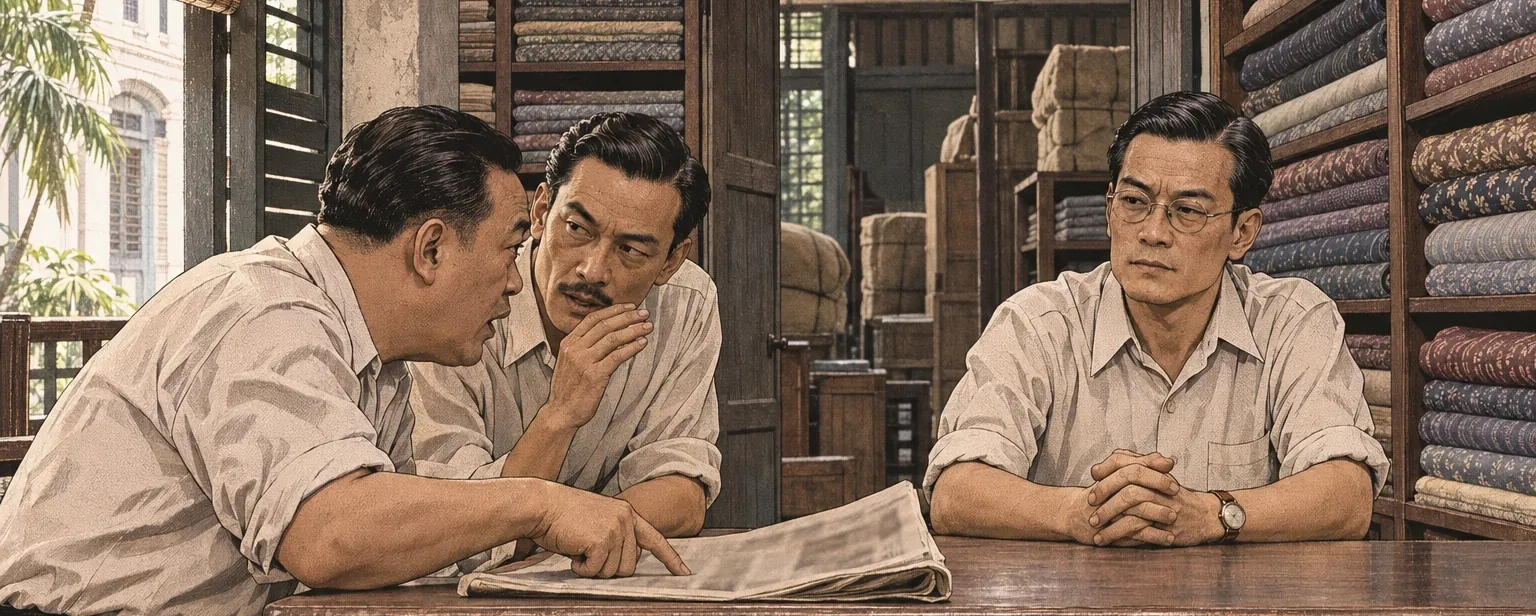
The slump went on all year, and the firm did not grow in it, but it did not shrink. When the godown needed restocking in the spring and the bank was cautious, the man from the clan association lent again, on terms that were hardly terms at all, because he had lent to Cheng Huat's father and to Cheng Huat, and both had paid. None of the customers went bad on them that year, which in 1952 was itself a kind of luck.
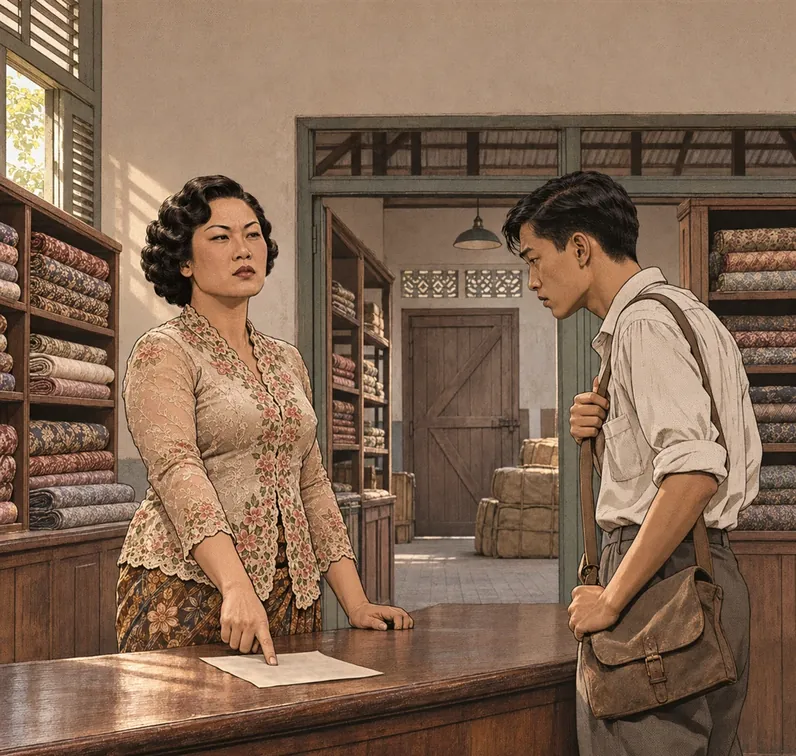
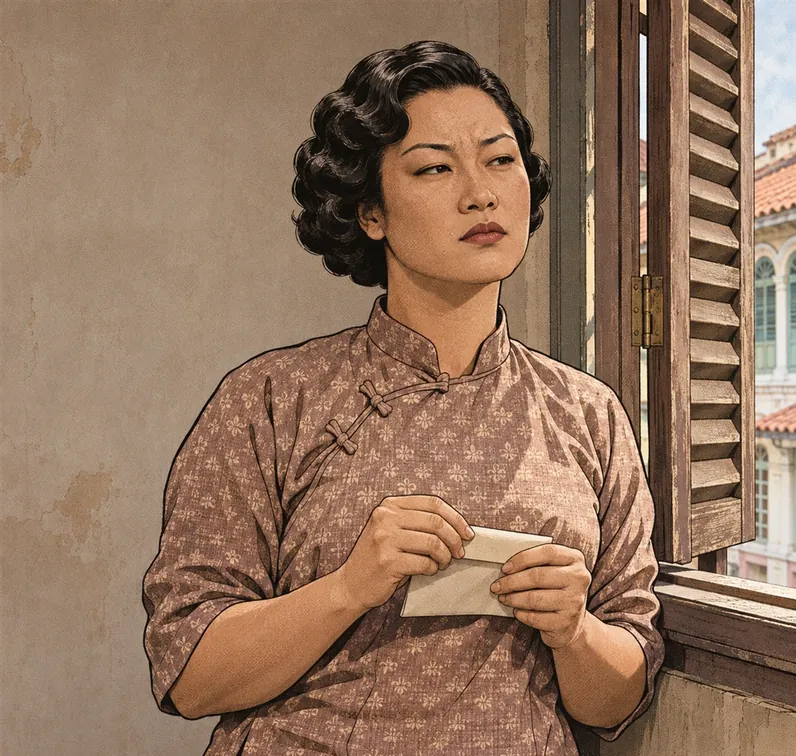
Swee Neo was there most mornings now, not only for the books. She dealt with the suppliers' clerks, who found her harder to put off than her husband. She was stronger that year than at any time since the war; she put on weight, and the doctor stopped the injections. Only one thing went wrong for her. Years before, she had lent a sum from her own savings, her jewellery money, to a friend from her mother's village whose husband had a coffee shop. In 1952 the coffee shop closed, and the friend wrote to say she was sorry. Swee Neo read the letter at the window and folded it small and did not mention the money again.
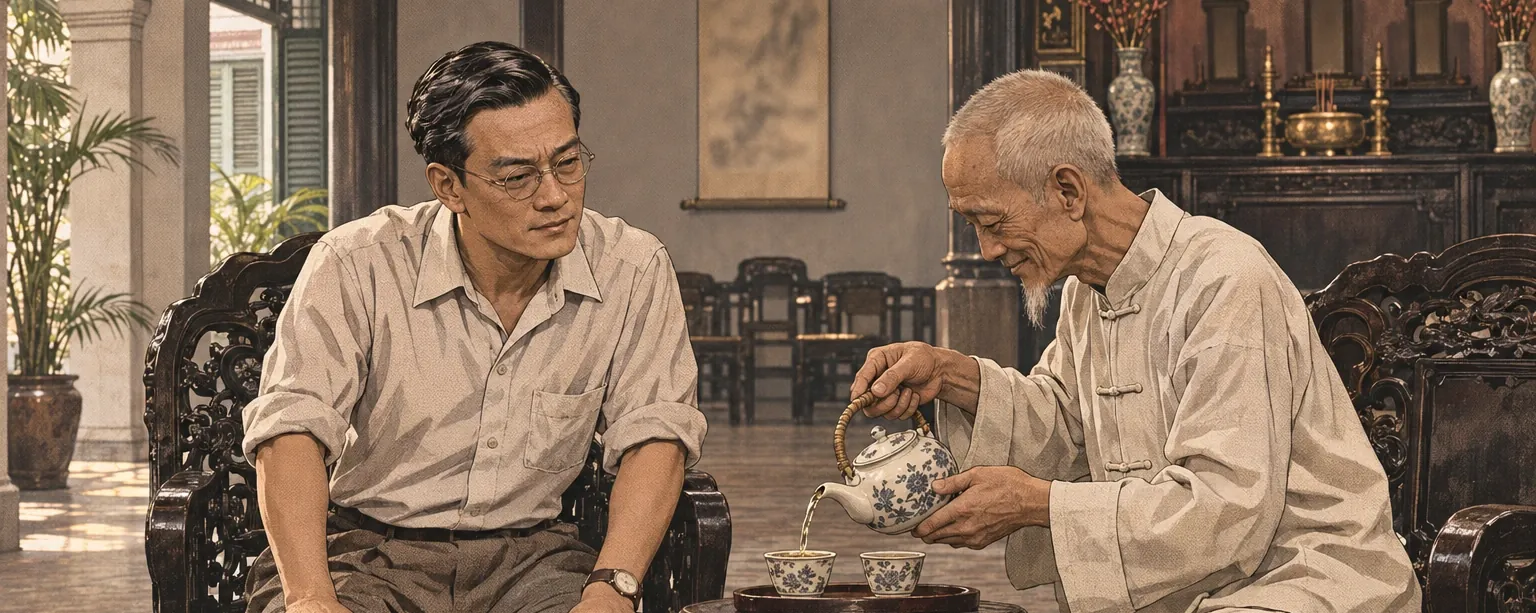
The quarrel of the year before had gone out of the house. They were easier with each other than they had been for a long time, the two of them in the same ledger, and in the evenings they sat together on the upstairs veranda with the lamp unlit and talked about the firm.
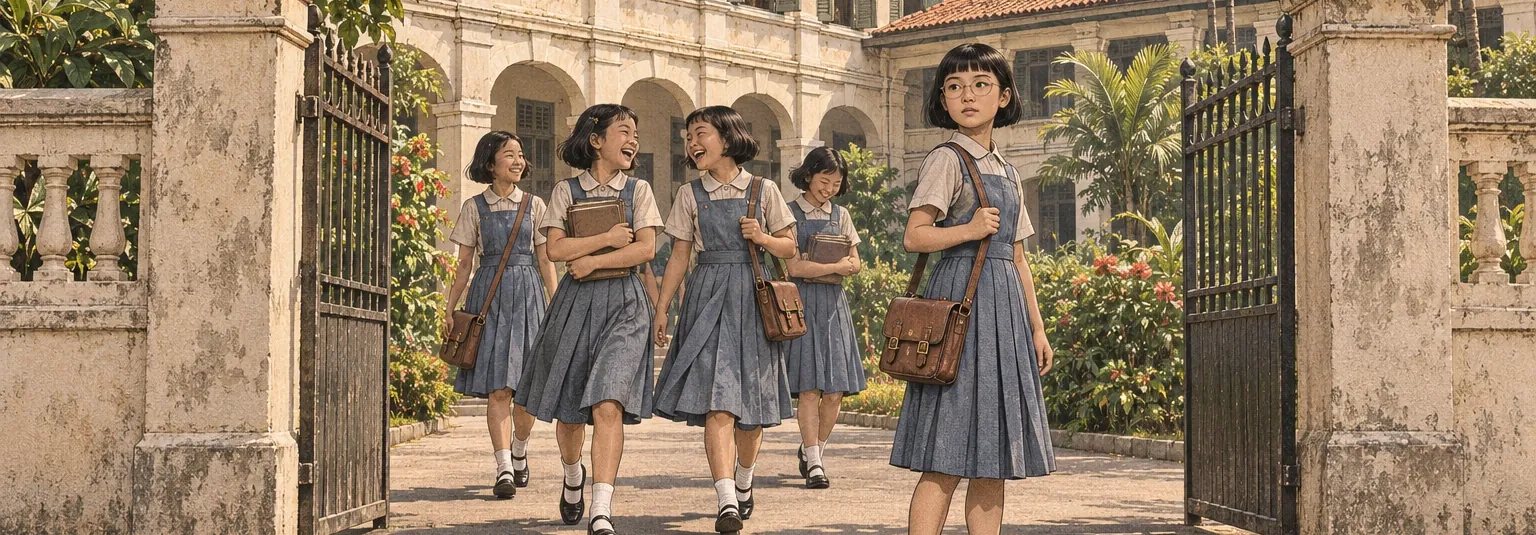
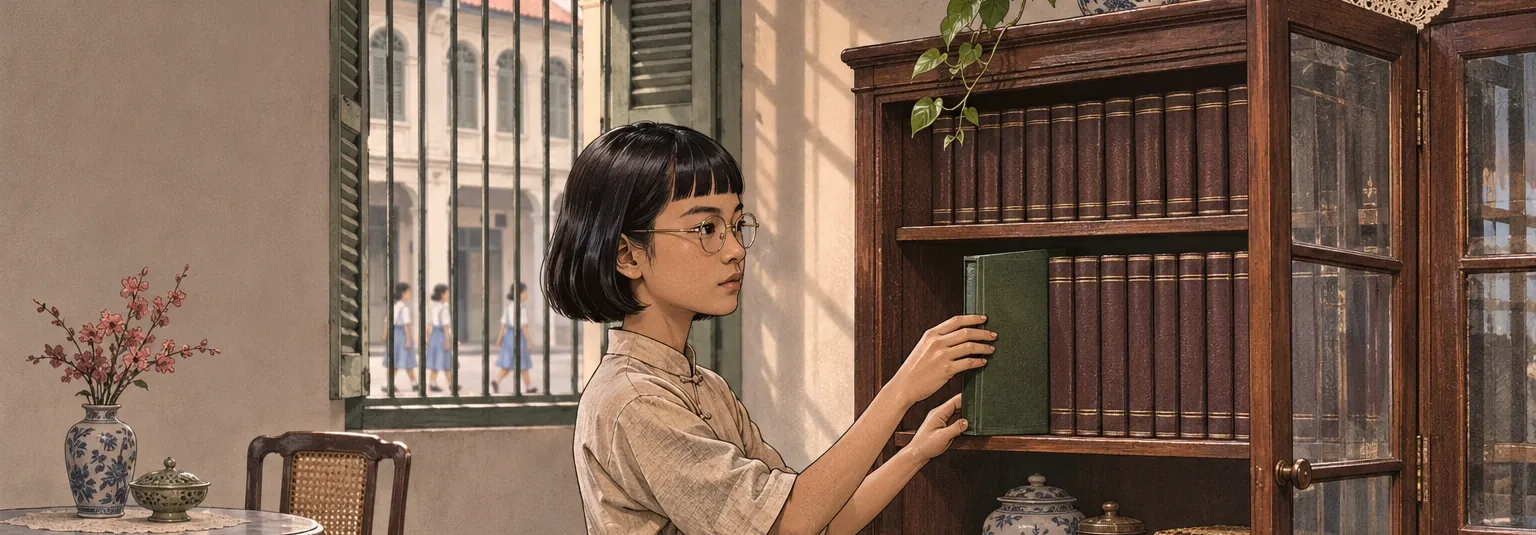
She kept the prize book on the shelf with the encyclopaedias, and when the girls from her old class went past the house in their uniforms in January she did not go to the window.