In 1947 seven-year-old Mei Lin reads aloud in class for the first time and has an ordinary school year. At home the grown-ups are short-tempered. Tan Cheng Huat's trade stalls, no credit comes for a proper firm, the money he lost in 1946 is not recovered, and the newspapers' reports on the trial of the officers behind the Sook Ching bring the screening centre back to him. Lim Swee Neo gets more worrying news of a relative. The neighbours help where they can, and nobody in the family is seriously ill.
A work of fiction set in real history. The characters are invented; the historical events are real and sourced.
In 1946, the first full year of peace, six-year-old Mei Lin starts school in a neighbour's front room. Tan Cheng Huat's trade grows, but he does not manage to reopen a proper firm, is fined by a price-control inspector, and loses a consignment he had already paid for. Lim Swee Neo queues for rice, sews little, and receives news at last of a relative's household. Nobody in the family is seriously ill.

the child of the house, in her second year at school
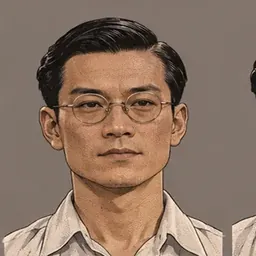
her father, a merchant without a firm
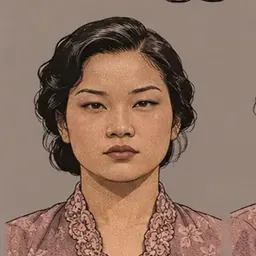
her mother
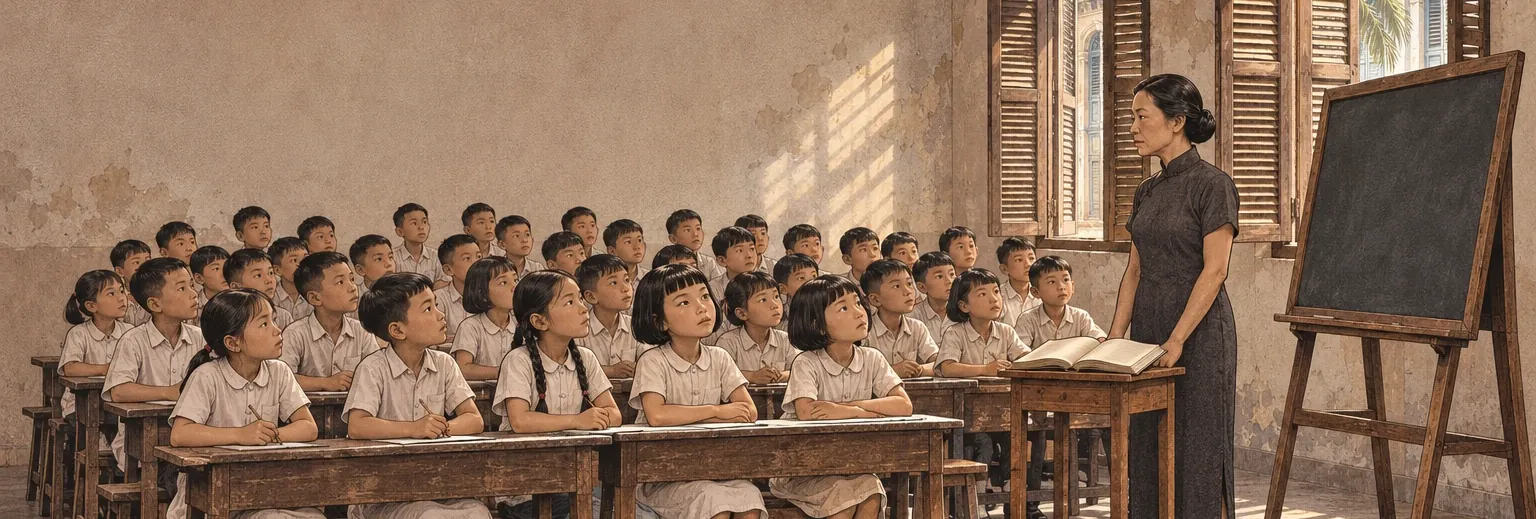
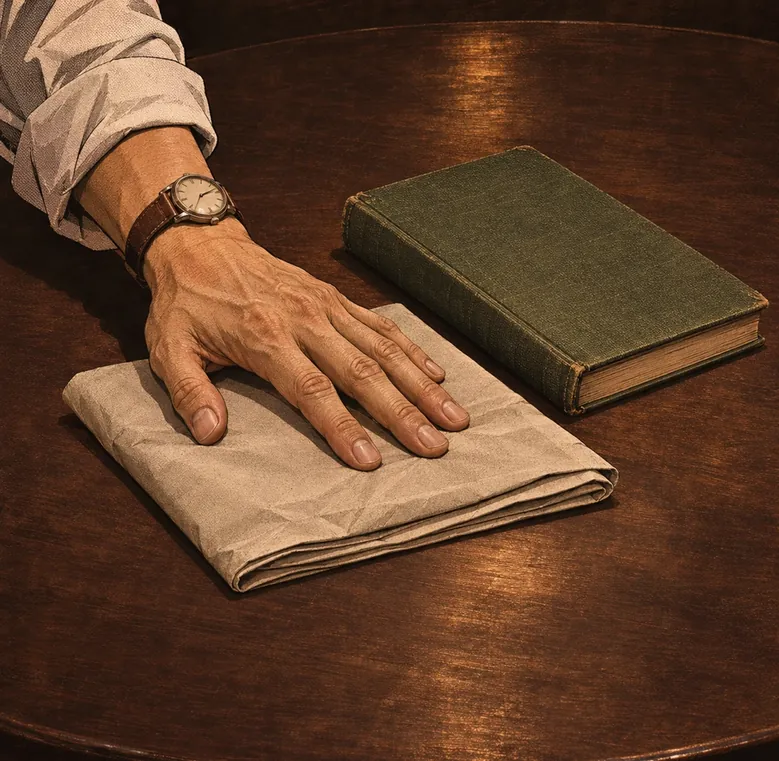



Singapore in 1947 is a Crown Colony recovering from the war: rice rationing eases in places but food, housing and goods remain short and expensive, and strikes and unrest continue. Rubber and tin exports revive and trade picks up in the second half of the year.
Behind the dice How likely was each thing that happened? (Spoilers)
Nothing in The Dice Decides is chosen by a writer. Each person's year is a set of rolls, weighted by their stats and their times; the story is written afterwards to fit what the dice decided.
| Who | What the dice decided | Result | Chance |
|---|---|---|---|
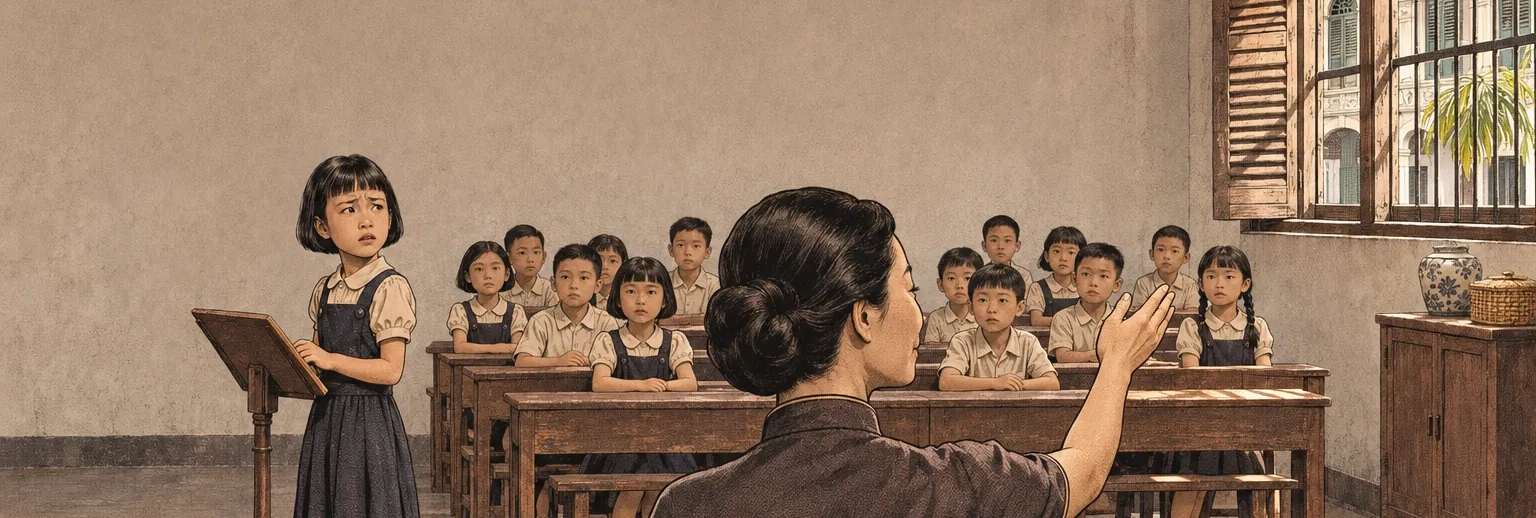
| Tan Mei Lin | Mei Lin reads a whole page aloud to the class, then again for the back row. | yes | 62% |
| Tan Cheng Huat | The Sook Ching trial in the papers brings the screening back; the back step. | trial memory | 8% |
| Tan Cheng Huat | His trade neither prospers nor fails: thicker goods, thinner prices. | no | 51% |
| Tan Cheng Huat | No credit for a proper firm: the same answer, in a different order. | no | 75% |
| Tan Mei Lin | A short-tempered house; Mei Lin learns to read her father's step on the stair. | family strain | 8% |
| Tan Mei Lin | Neighbours bring soup and lend a hand-cart; nobody speaks of owing. | neighbours | 16% |
| Lim Swee Neo | Another letter for the drawer: nothing he can mend. | bad news | 8% |
| Tan Mei Lin | An ordinary school year: no prizes, no quarrels. | quiet | 34% |
| Lim Swee Neo | No new sewing custom; the basket stays untouched. | no | 72% |
| Tan Cheng Huat | The agent with his 1946 money does not write. | no | 86% |
| Tan Mei Lin | No serious illness for Mei Lin. | no | 98% |
| Tan Mei Lin | A bad trading month, but the household is not squeezed further. | no | 88% |
| Tan Mei Lin | Mei Lin alive at the year's end. | no | over 99% |
| Tan Cheng Huat | Cheng Huat is not seriously ill. | no | 95% |
| Tan Cheng Huat | Cheng Huat survives the year. | no | over 99% |
| Lim Swee Neo | Swee Neo is not seriously ill. | no | 93% |
| Lim Swee Neo | Swee Neo alive at the year's end. | no | over 99% |
Chances are the simulation's model assumptions, not historical statistics.
Show as a table
| Year | Household a month | Peer median | Multiple |
|---|---|---|---|
| 1941 | $504 | $42 | 12.0× |
| 1942 | $82 | $42 | 2.0× |
| 1943 | $148 | $42 | 3.5× |
| 1944 | $204 | $42 | 4.9× |
| 1945 | $815 | $120 | 6.8× |
| 1946 | $1,114 | $150 | 7.4× |
| 1947 | $1,094 | $155 | 7.1× |
Nominal dollars; the engine's model estimate, the same figure as each issue's money line.
The chapter in prose
1947: Short Tempers
In 1947 seven-year-old Mei Lin reads aloud in class for the first time and has an ordinary school year. At home the grown-ups are short-tempered. Tan Cheng Huat's trade stalls, no credit comes for a proper firm, the money he lost in 1946 is not recovered, and the newspapers' reports on the trial of the officers behind the Sook Ching bring the screening centre back to him. Lim Swee Neo gets more worrying news of a relative. The neighbours help where they can, and nobody in the family is seriously ill.
Reading Aloud
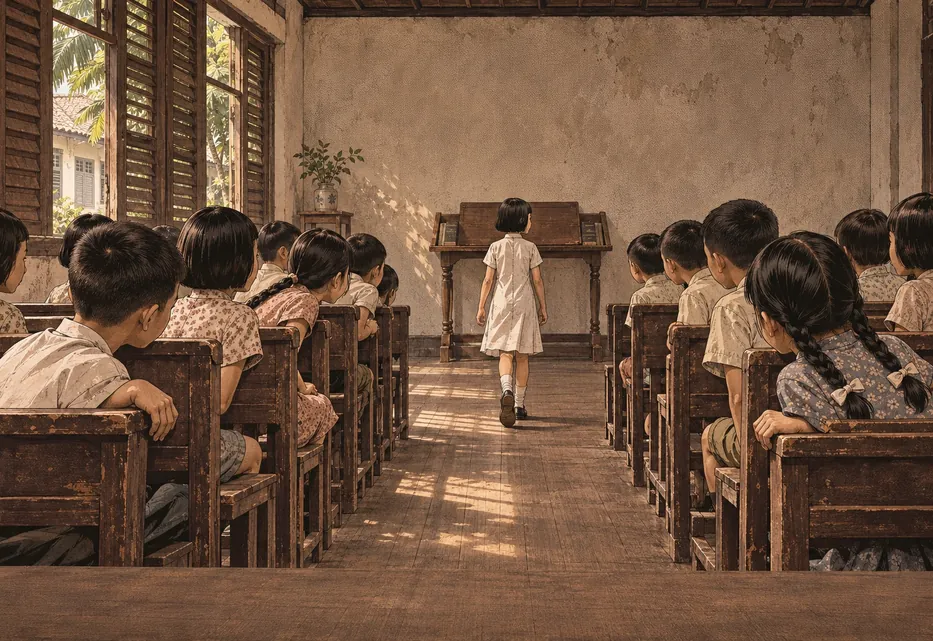
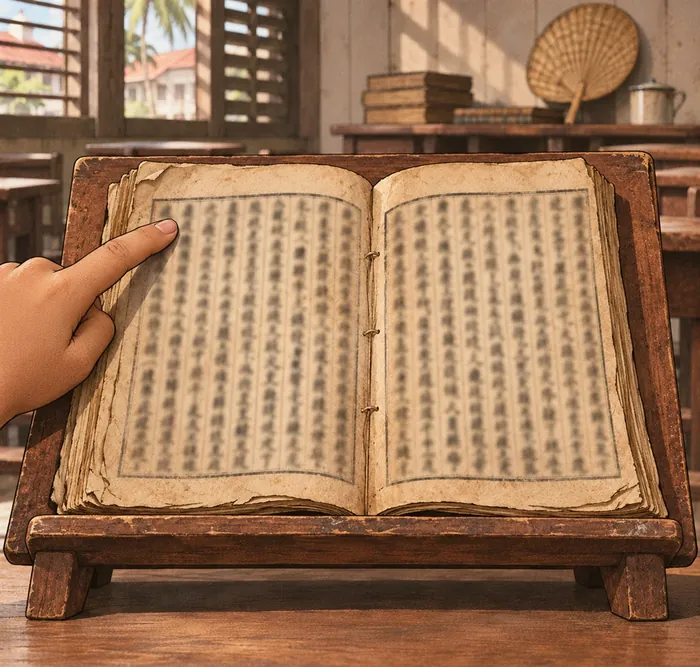
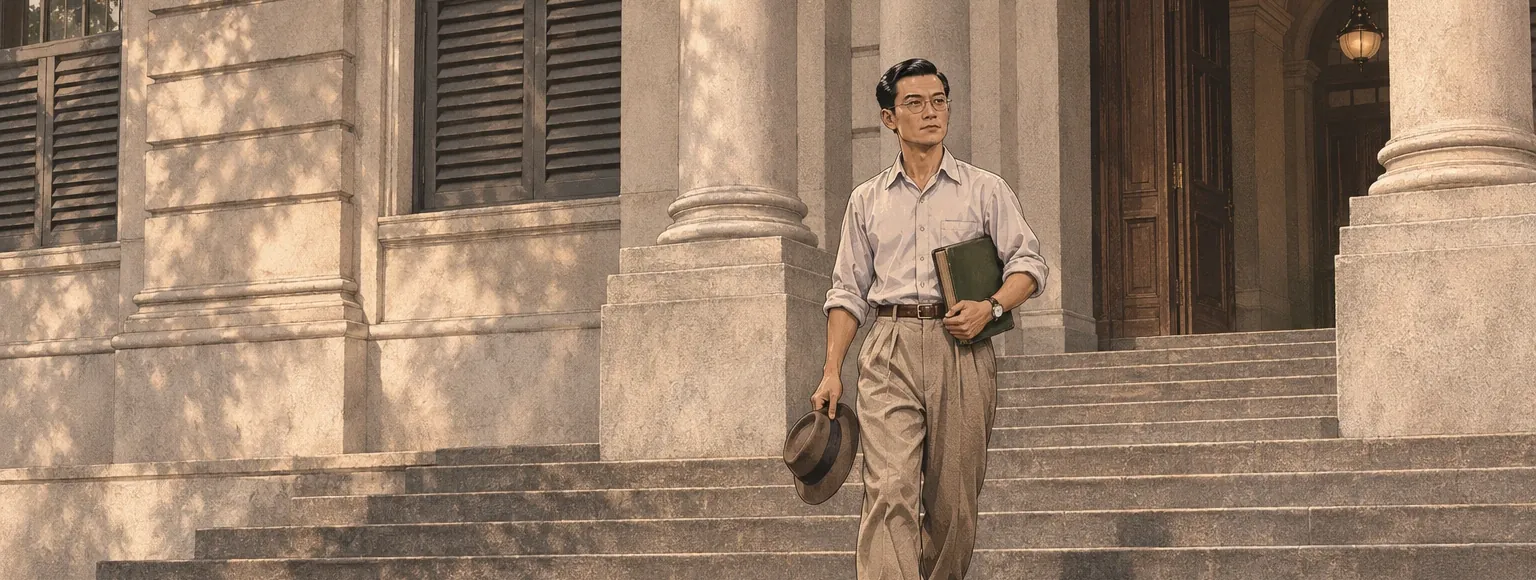
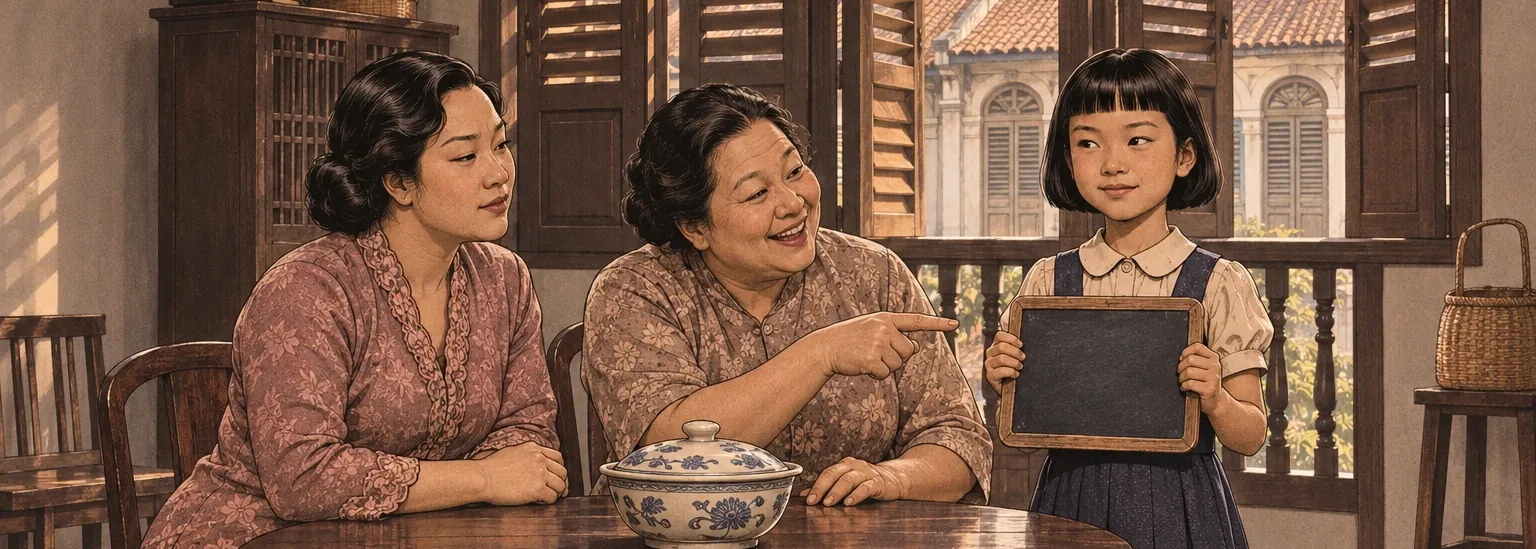
It was an ordinary school year. The room was still hot, the slates still cracked, the teacher still short of everything but patience. There were no prizes and no quarrels she remembered. There was, in the second term, a morning when the teacher put the single book on the stand at the front of the room and called her name.
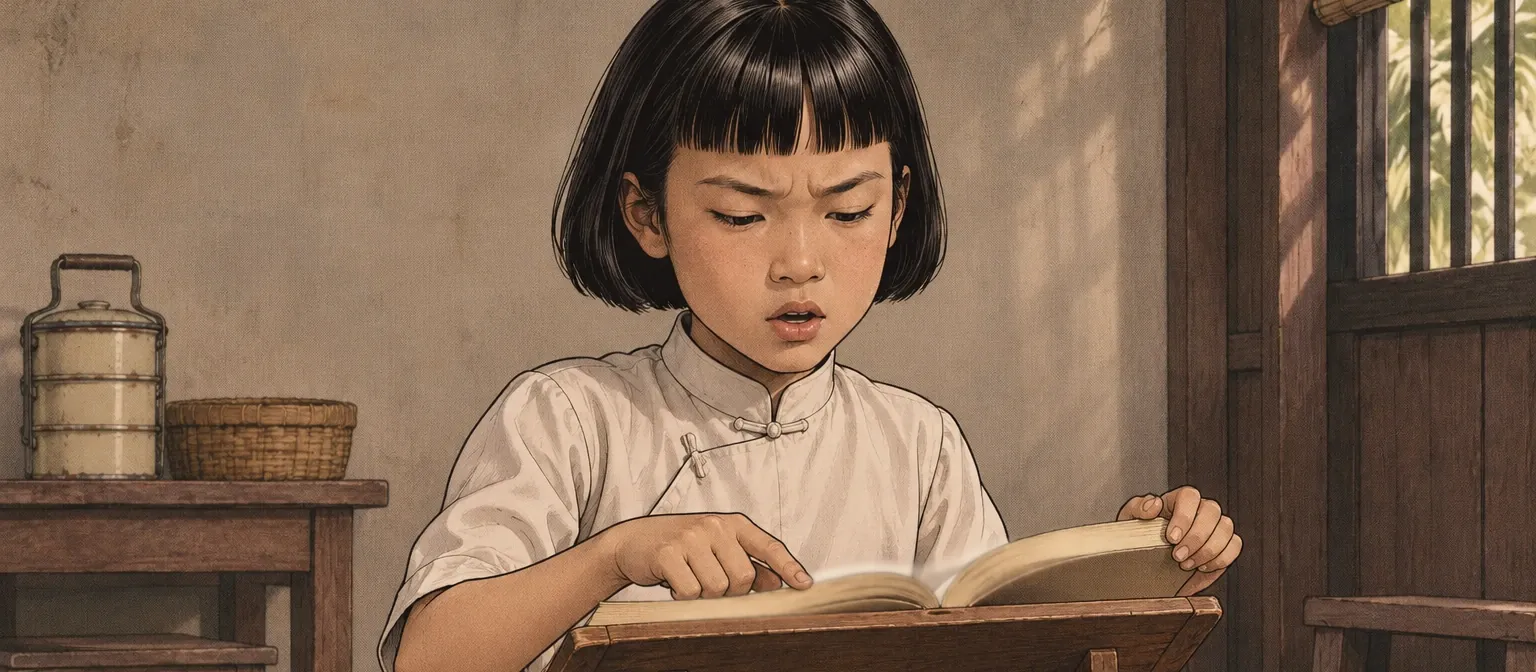
She was seven. She stood up and walked to the front, which seemed a long way, and the page was black with characters, and she could feel the thirty others looking at the back of her head. She began. Her voice was thin and went too quick, and at the third line she stopped, and started again, slower. She read the whole page. When she finished no one said anything, which she took for failure, and then the teacher said, "Again, from the top, for the back row," and she did.
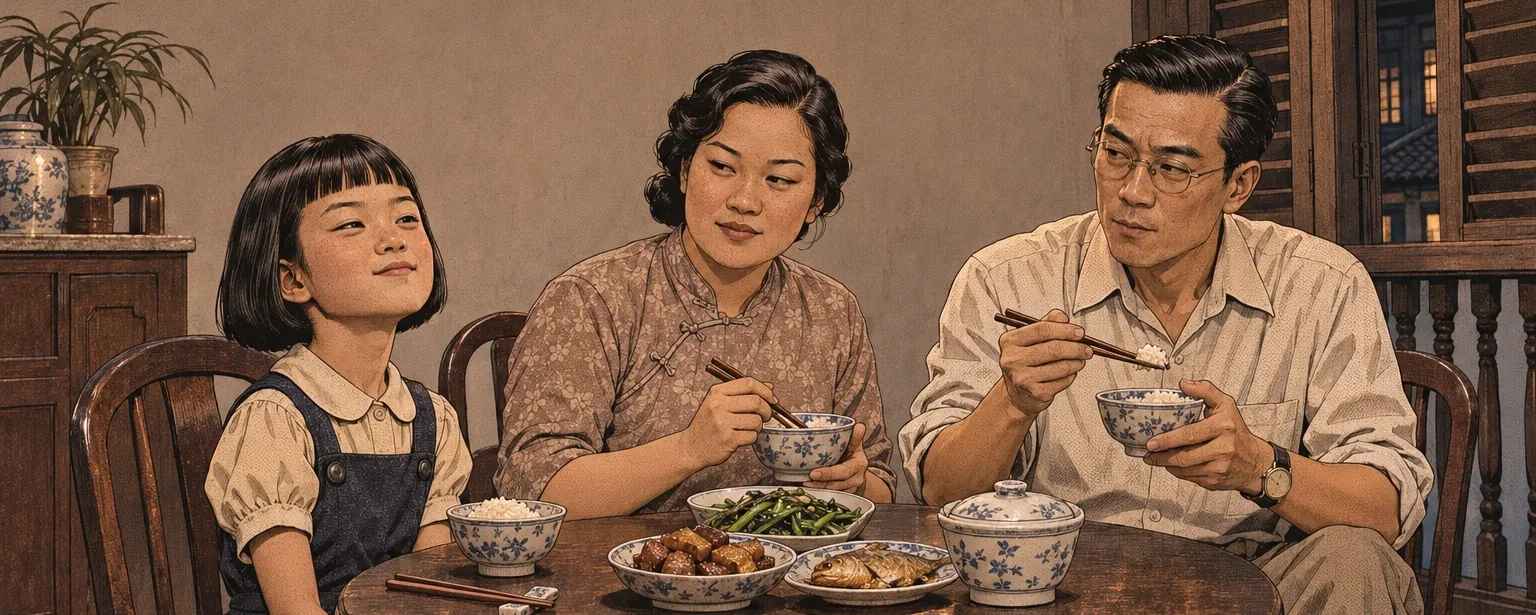
She walked home with her face still hot. She did not tell her parents. At supper she put her chopsticks down, and said, to no one, that a person could read a whole page if she went slowly enough, and her mother looked up and said that this was so.
The Trial in the Papers
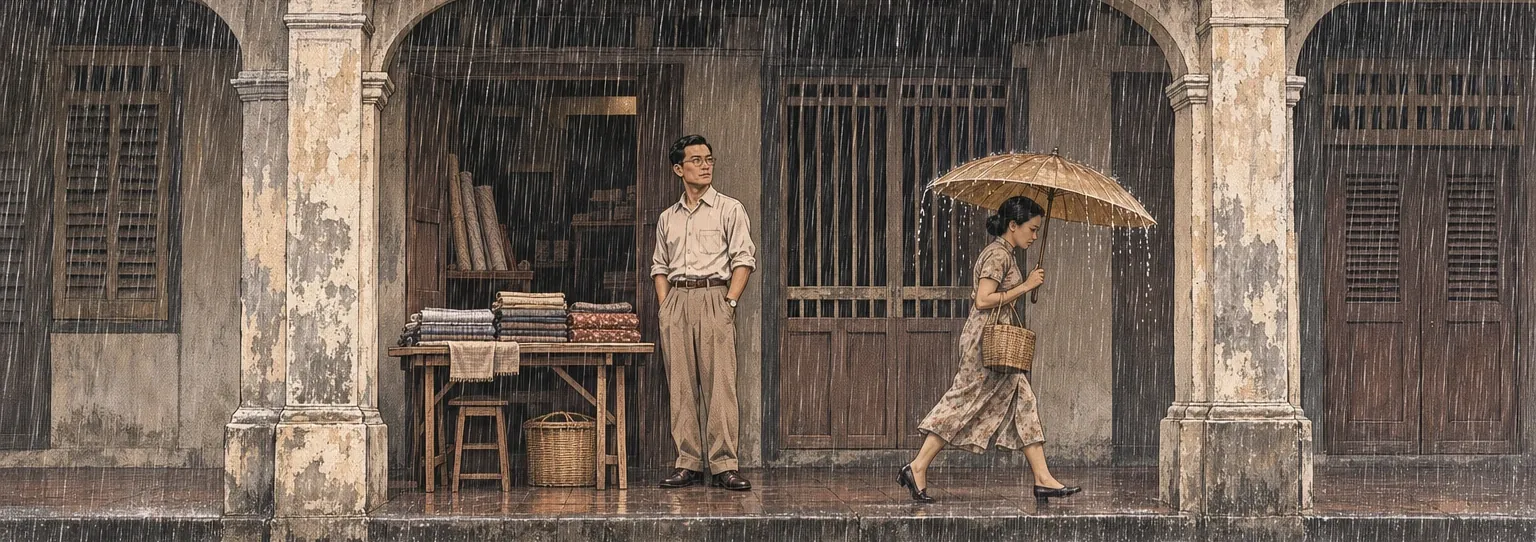
Cheng Huat's trade did not prosper that year, though it did not fail. He sold from his table, and from the godown corner when it rained, and the goods came in a little thicker than before and went out a little cheaper. He went again to the men who might lend against his name, and they said what they had said the year before, in a different order. The agent in whose hands he had left the money for the consignment did not write.
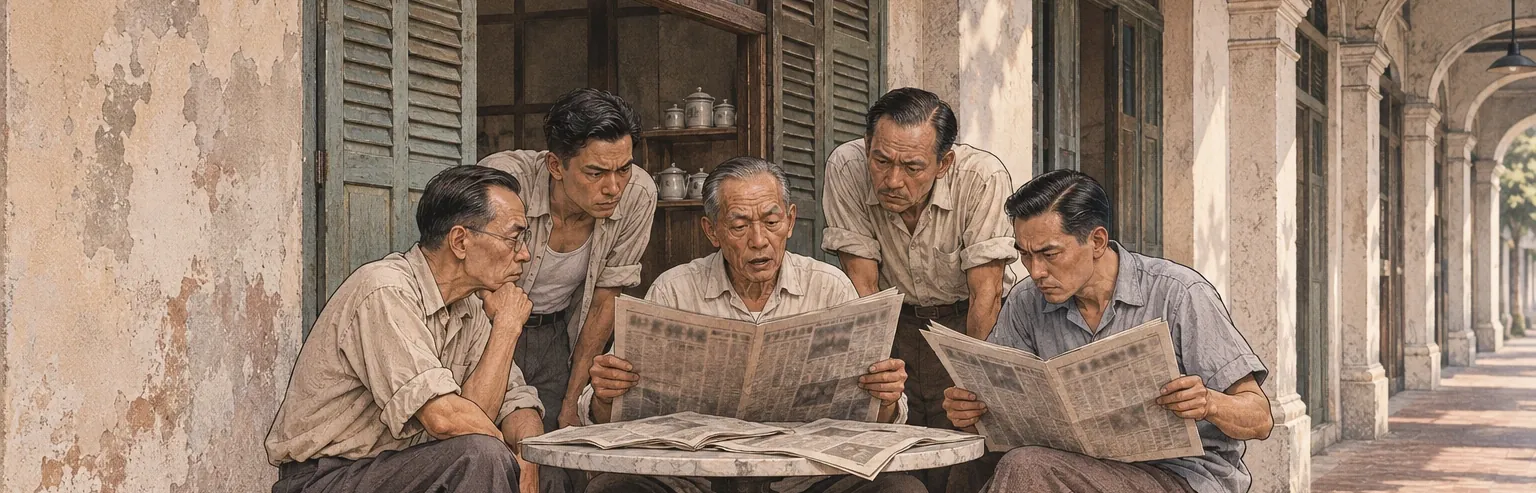
In the spring the newspapers carried the trial. A court of British officers sat in Singapore and heard evidence about the screening of the Chinese, and the men who gave the orders. They were seven men. The papers printed their names, and the sentences, and for a week the street talked about nothing else.
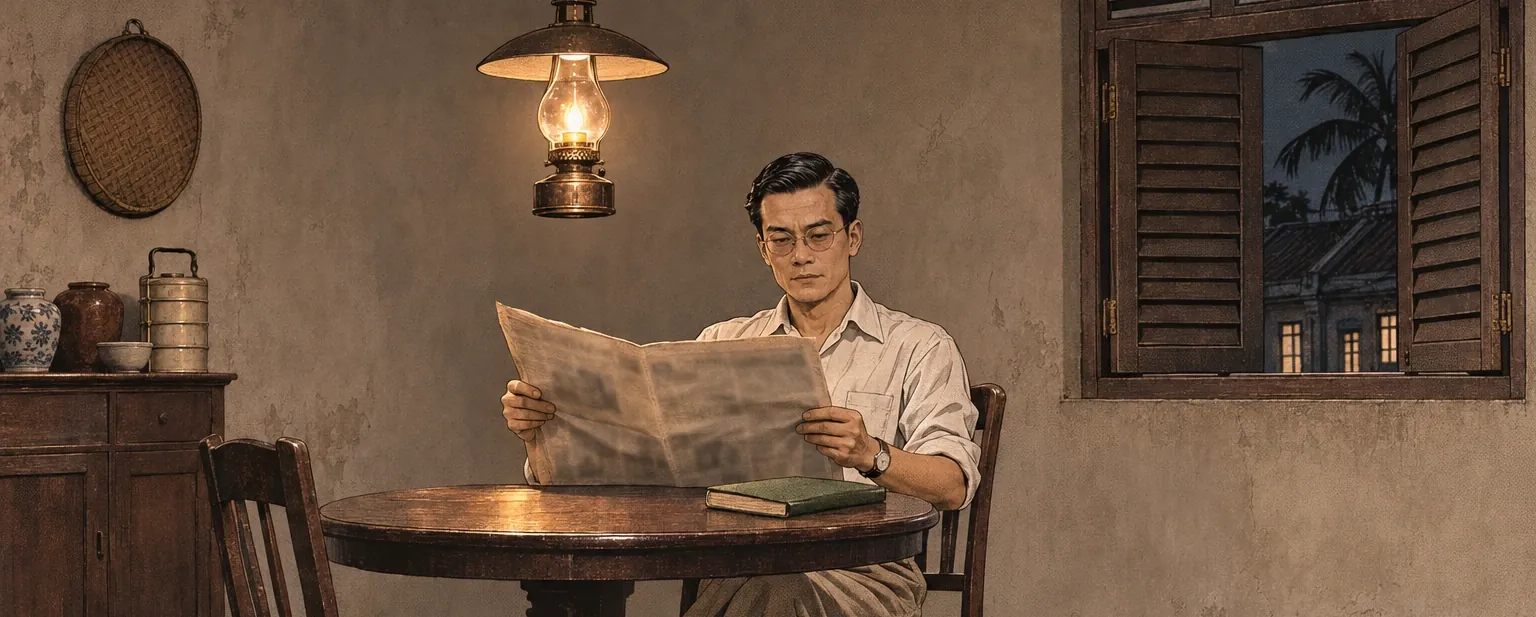
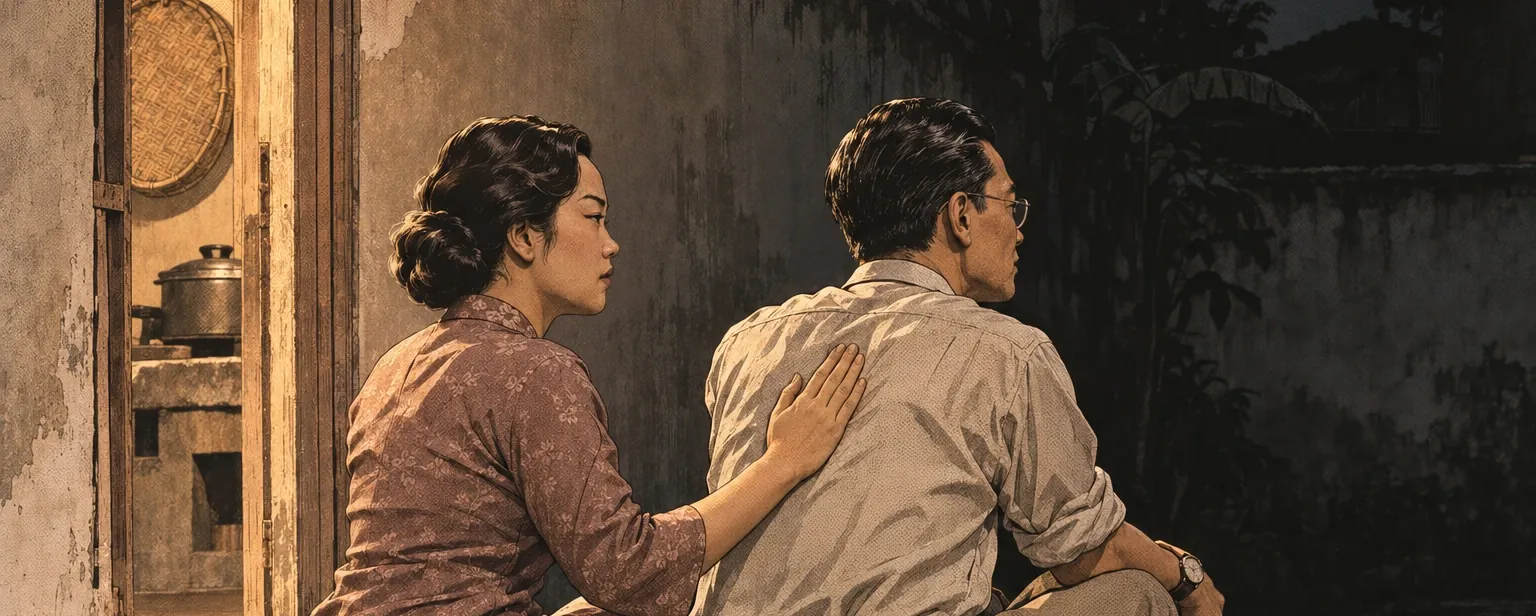
He read it at the table, in the evenings, with the ledger closed beside the paper. He did not say anything. He did not read the whole of it, only the parts that told where the centres had been and what they had done. At the section describing a school ground, he put the paper down and stood up and went to the back step, where he stood for a long time with his hands in his pockets.
His wife came out after a while and stood beside him. Neither of them said what the school ground was, or why it was familiar. She put her hand flat between his shoulder blades, and left it there until he spoke of something else.
Short Tempers
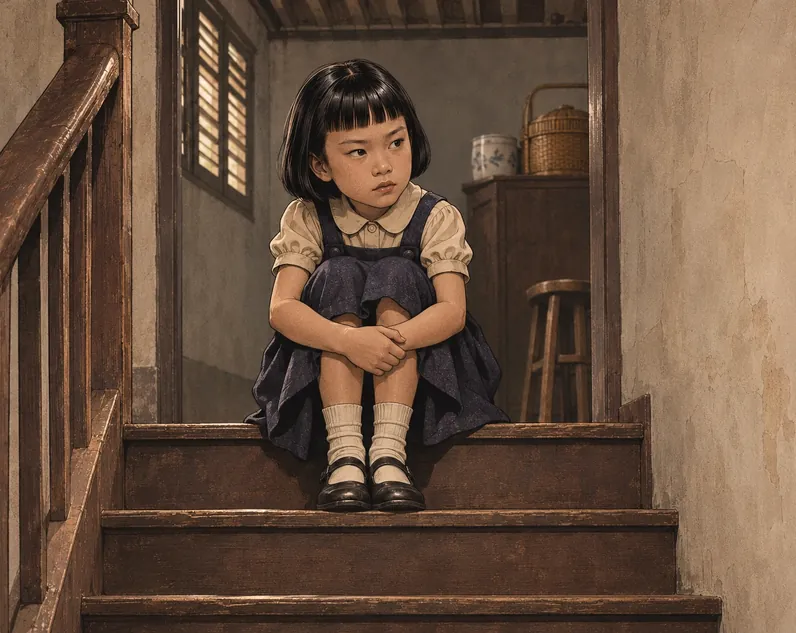
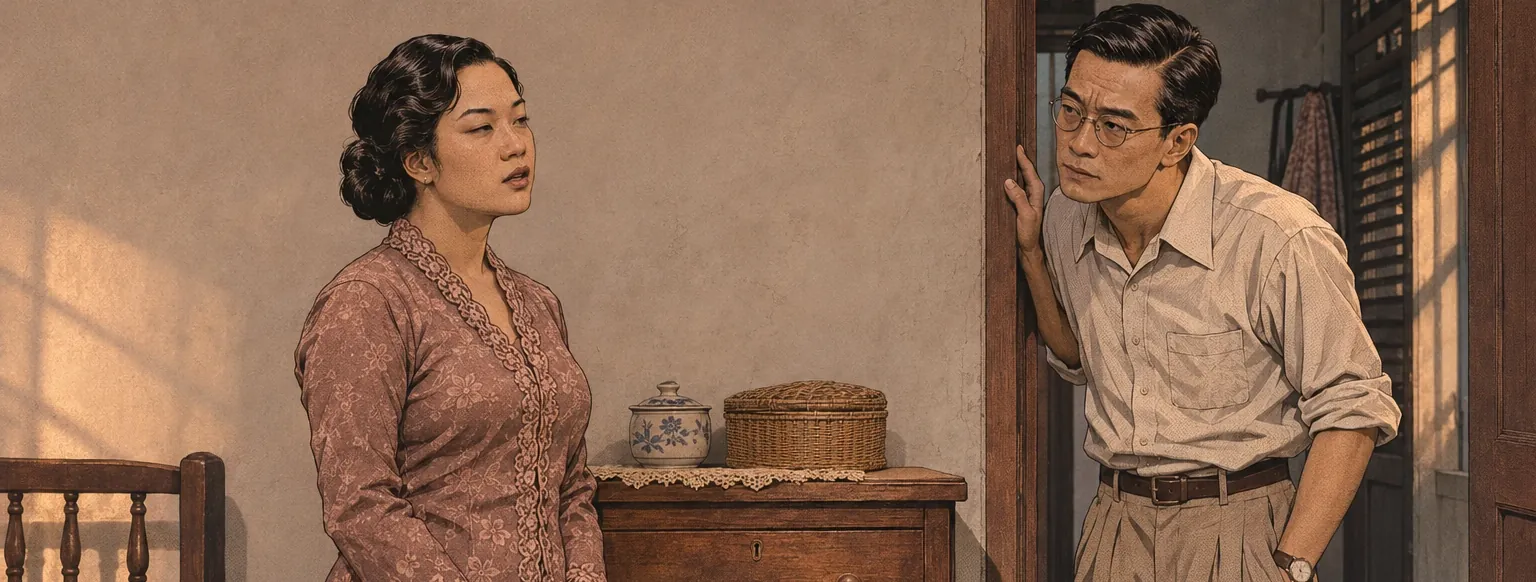
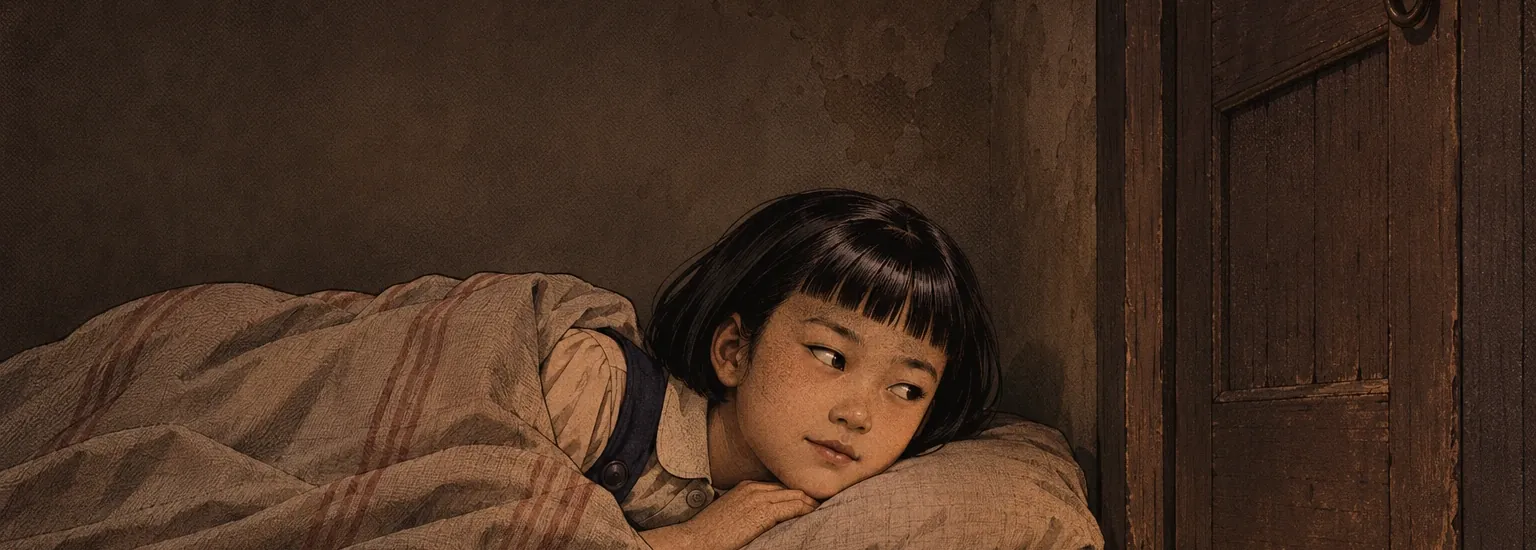
It was a short-tempered house that year. Nobody was unkind. They were tired, and the tiredness had a way of coming out sideways: at the price of lamp oil, at the water left in the basin, at a plate set down a little harder than it needed to be. Mei Lin learned to read the sound of her father's feet on the stair. She learned to go out to the yard when the voices in the kitchen got low and even.
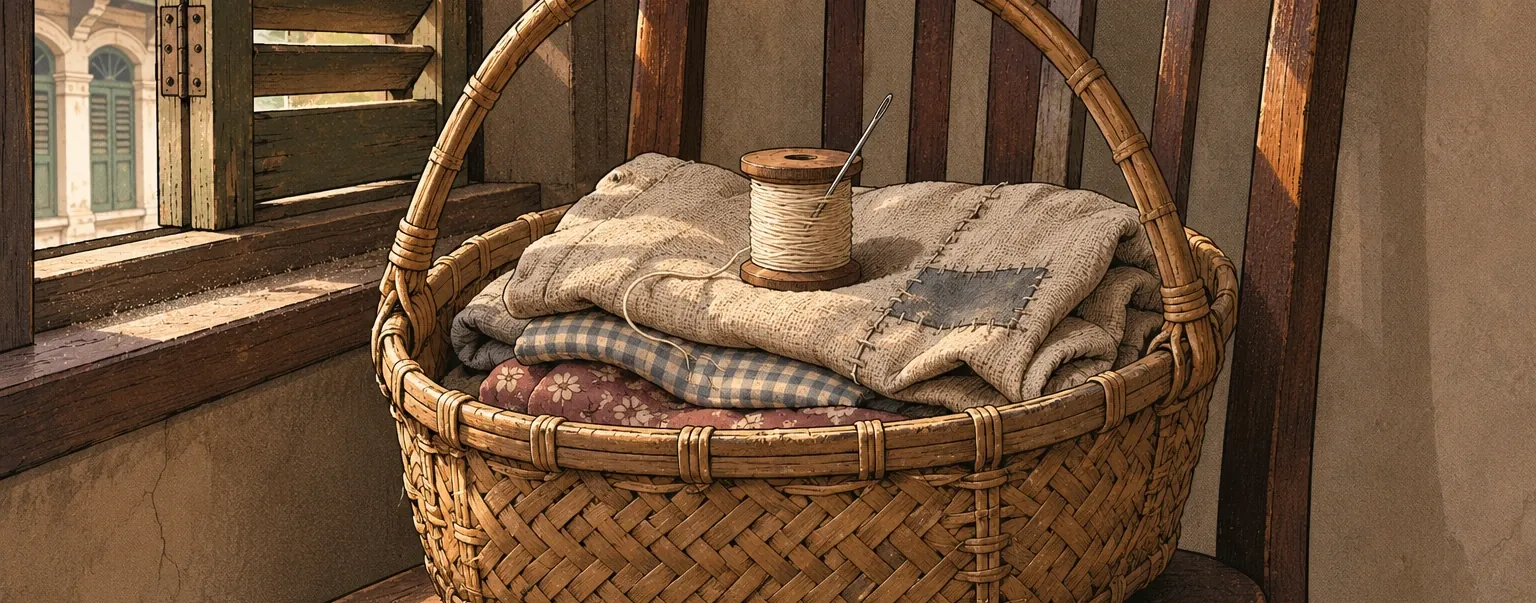
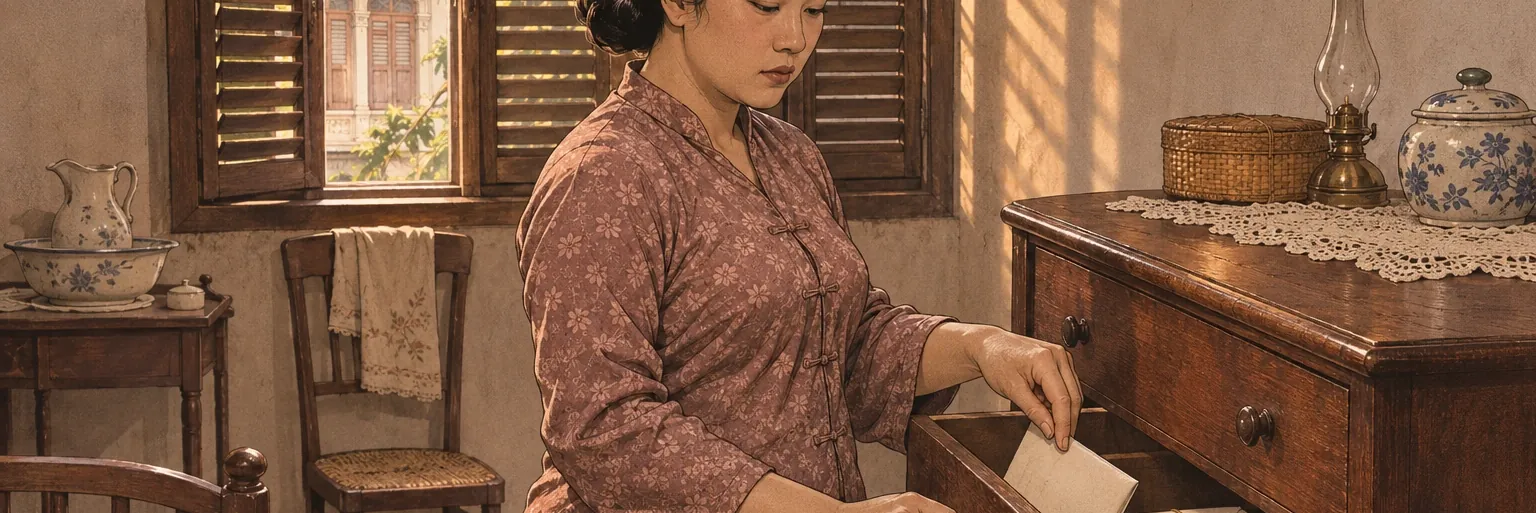
Swee Neo did little sewing. She had stopped taking new custom and kept the old, and the basket by the window went days untouched. Another letter came in the autumn, and she read it standing, as she had read the others, and put it in the drawer where she kept them. She told Cheng Huat that it was nothing he could mend. He asked whether she wanted him to try anyway. She said not yet.
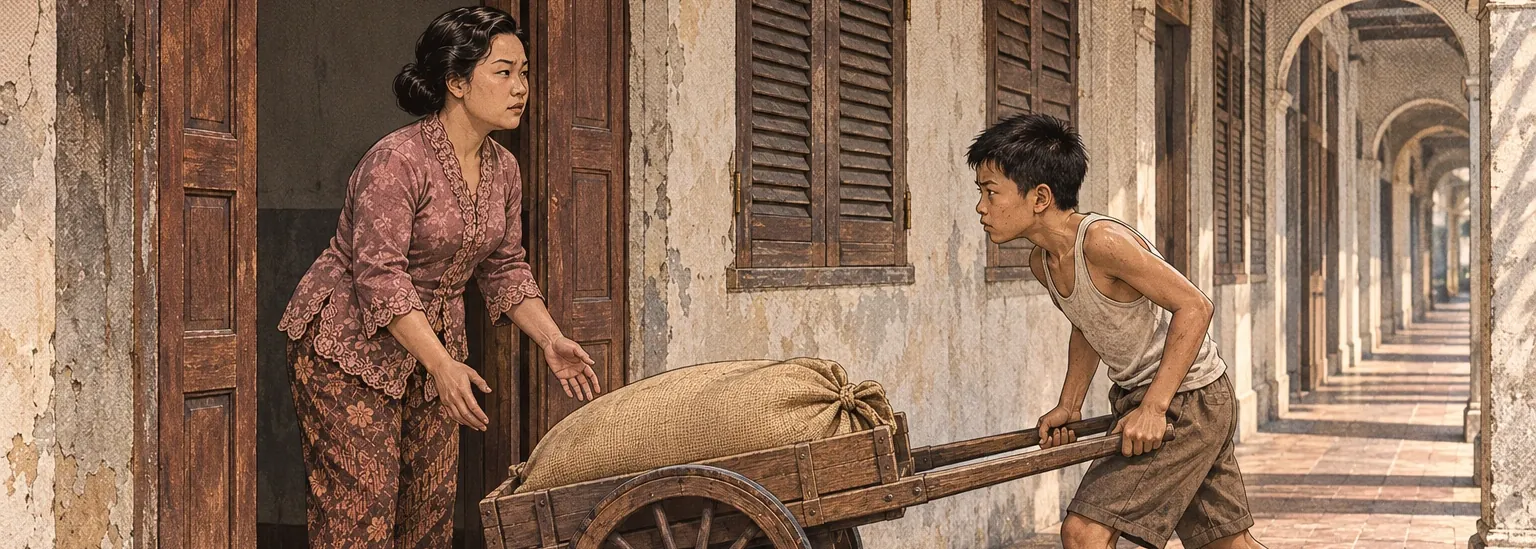
It was the street that kept the house from tilting. A neighbour came by with a bowl of soup and stayed to talk about the school. Another sent her boy with the loan of a hand-cart when the rice came late. Nobody said anything about being owed. They had been through the same four years, and they had the same drawer.
When the lamp was out and the house had gone quiet Mei Lin lay listening to her father and mother speaking low in the next room, the way they did when they had decided to be kind about something, and fell asleep before she could hear what it was.