In 1956 the firm grows for the first time since 1950. Lim Swee Neo's banker introduces her to the bursar of a girls' school, and the order for uniform cloth becomes steady business. The firm grows on its own as well, though a third customer's debt goes bad. Tan Cheng Huat is asked onto the clan association's committee. Sixteen-year-old Mei Lin, at home, is given lessons in sewing, cooking and the piano, as daughters of her class were. Her father admits in front of the clerk that she keeps the books better than he does. A young assistant at the bookseller's takes a polite interest in her. The October riots and curfew pass the household by. Nobody in the family is seriously ill.
A work of fiction set in real history. The characters are invented; the historical events are real and sourced.
In 1955 Singapore votes in its first real election and goes through a year of strikes and riots, and none of it touches the Tan household. Fifteen-year-old Mei Lin no longer works at the counter. She keeps part of the firm's books at home and reads the English books her mother lets her order. Tan Cheng Huat is introduced to a buyer from one of the big European stores, and nothing comes of it. The firm neither grows nor loses. Lim Swee Neo sees the doctor in town and keeps the books as before. Nobody in the family is seriously ill.
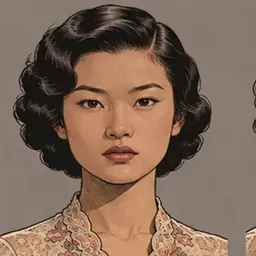
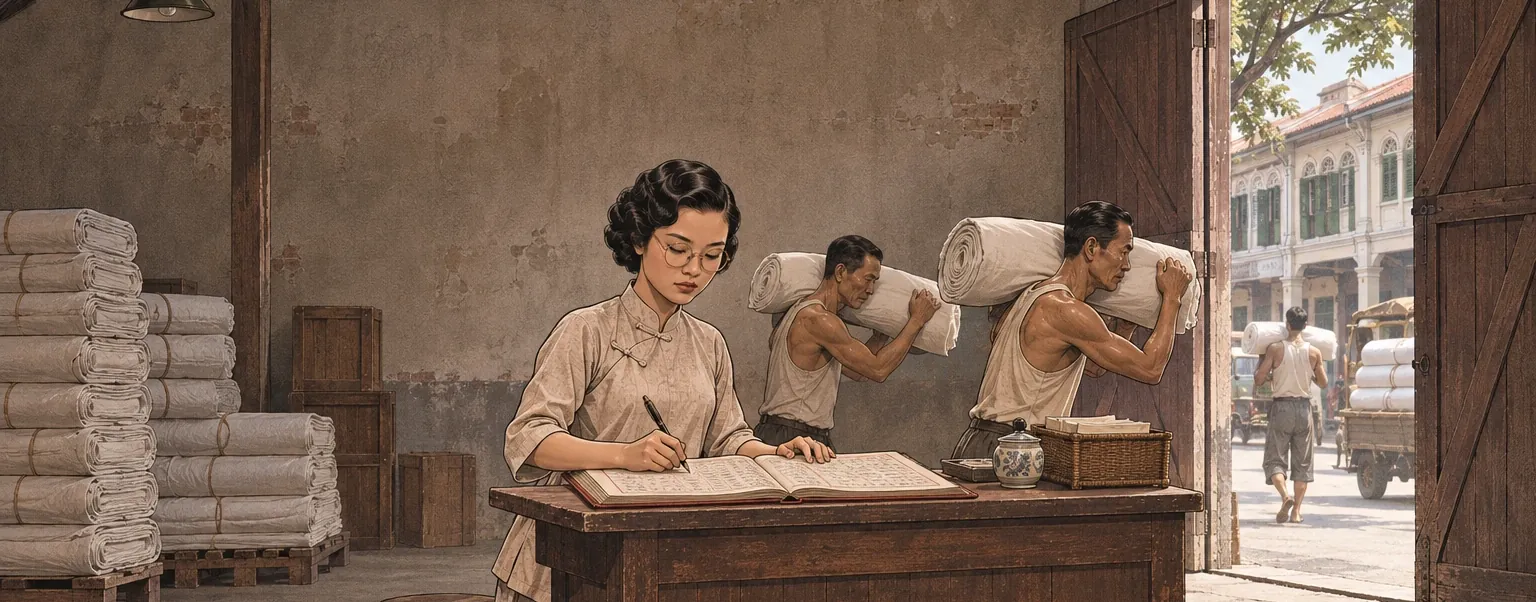
the daughter of the house, keeping part of the firm's books at home

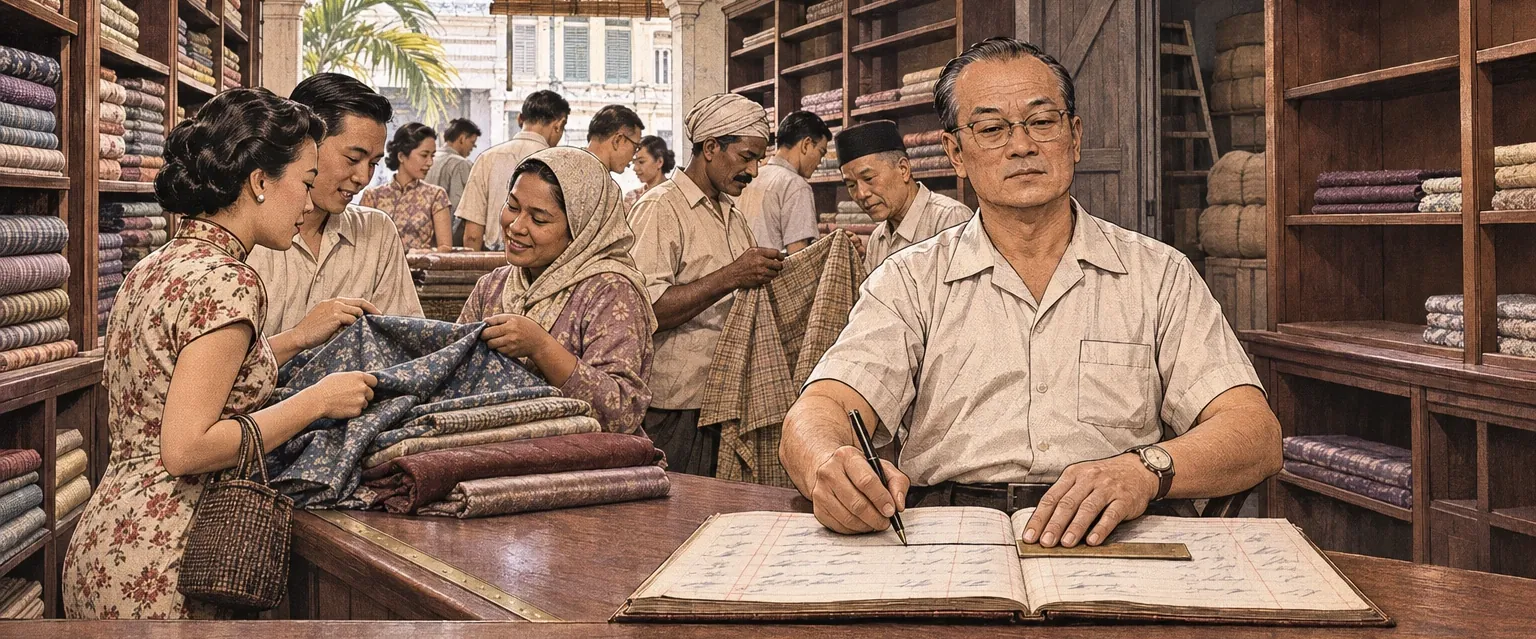
her father, a cloth merchant
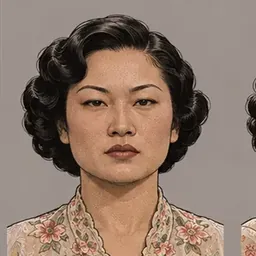
her mother, who runs the firm's accounts with institutions and the bank

Singapore in 1956 is a Crown Colony with an elected Chief Minister. David Marshall leads an all-party delegation to London in April-May for self-government talks; they fail over internal security, and Marshall resigns in June. Lim Yew Hock succeeds him.
Behind the dice How likely was each thing that happened? (Spoilers)
Nothing in The Dice Decides is chosen by a writer. Each person's year is a set of rolls, weighted by their stats and their times; the story is written afterwards to fit what the dice decided.
| Who | What the dice decided | Result | Chance |
|---|---|---|---|
| Lim Swee Neo | The bank manager introduces the school bursar. | introduction | 14% |
| Lim Swee Neo | The uniform cloth becomes an account. | yes | 64% |
| Tan Cheng Huat | The firm grows for the first time since 1950. | yes | 49% |
| Tan Cheng Huat | Asked onto the clan association's committee. | standing | 11% |
| Lim Swee Neo | She runs the institutional customers, the bank and the suppliers. | yes | 51% |
| Tan Mei Lin | Sewing, the kitchen and the piano. | home lessons | 31% |
| Tan Mei Lin | Her books better kept than his own. | recognition | 13% |
| Tan Mei Lin | The bookseller's assistant and his lists. | admirer | 14% |
| Tan Mei Lin | The October riots and curfew pass them by. | quiet | 19% |
| Tan Mei Lin | The doctor paints her throat. | good doctor | 30% |
| Tan Cheng Huat | The Katong shopkeeper goes to Kuala Lumpur owing them. | yes | 14% |
| Tan Cheng Huat | The October riots shut the firm for two days only. | no | 85% |
| Tan Mei Lin | A quiet year at home. | quiet | 27% |
| Tan Cheng Huat | Evenings on the veranda. | closeness | 11% |
| Lim Swee Neo | The uniforms wore better than any before. | good news | 8% |
| Tan Mei Lin | No serious illness for Mei Lin. | no | over 99% |
| Tan Mei Lin | The house is not pinched this year. | no | 91% |
| Tan Mei Lin | Mei Lin survives the year. | no | over 99% |
| Tan Cheng Huat | No serious illness for Cheng Huat. | no | 97% |
| Tan Cheng Huat | Cheng Huat survives the year. | no | over 99% |
| Lim Swee Neo | No serious illness for Swee Neo. | no | 96% |
| Lim Swee Neo | Swee Neo survives the year. | no | over 99% |
Chances are the simulation's model assumptions, not historical statistics.
Show as a table
| Year | Household a month | Peer median | Multiple |
|---|---|---|---|
| 1941 | $504 | $42 | 12.0× |
| 1942 | $82 | $42 | 2.0× |
| 1943 | $148 | $42 | 3.5× |
| 1944 | $204 | $42 | 4.9× |
| 1945 | $815 | $120 | 6.8× |
| 1946 | $1,114 | $150 | 7.4× |
| 1947 | $1,094 | $155 | 7.1× |
| 1948 | $1,072 | $160 | 6.7× |
| 1949 | $1,051 | $165 | 6.4× |
| 1950 | $1,691 | $170 | 9.9× |
| 1951 | $1,753 | $175 | 10.0× |
| 1952 | $1,901 | $180 | 10.6× |
| 1953 | $1,841 | $185 | 10.0× |
| 1954 | $1,791 | $190 | 9.4× |
| 1955 | $1,838 | $195 | 9.4× |
| 1956 | $2,083 | $200 | 10.4× |
Nominal dollars; the engine's model estimate, the same figure as each issue's money line.
The chapter in prose
1956: Uniform Cloth
In 1956 the firm grows for the first time since 1950. Lim Swee Neo's banker introduces her to the bursar of a girls' school, and the order for uniform cloth becomes steady business. The firm grows on its own as well, though a third customer's debt goes bad. Tan Cheng Huat is asked onto the clan association's committee. Sixteen-year-old Mei Lin, at home, is given lessons in sewing, cooking and the piano, as daughters of her class were. Her father admits in front of the clerk that she keeps the books better than he does. A young assistant at the bookseller's takes a polite interest in her. The October riots and curfew pass the household by. Nobody in the family is seriously ill.
Uniform Cloth
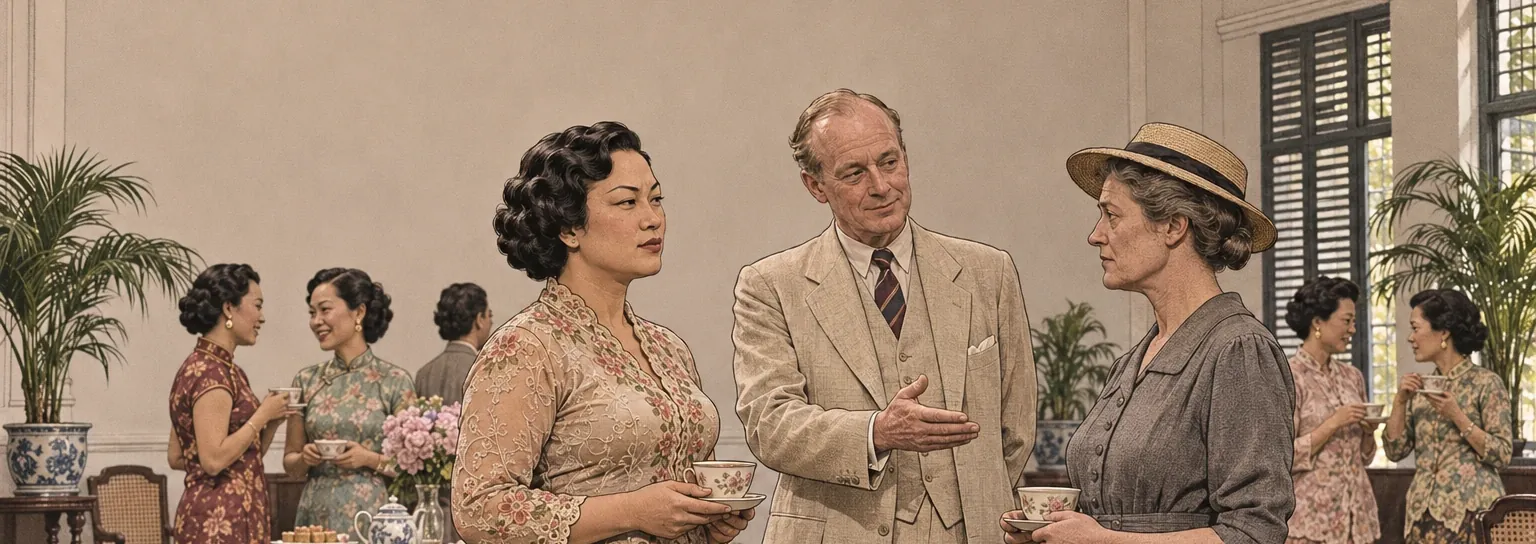
It was Swee Neo's bank manager who made the introduction, at a tea for the wives of the bank's Chinese customers that she had very nearly not gone to. He brought over the bursar of a girls' mission school, a tired Englishwoman who had been let down twice by her cloth supplier and wanted someone who would deliver what she ordered on the day she ordered it. Swee Neo said that she would. In March the first order came, white drill and blue cotton for the uniforms; in September the second, larger; by the end of the year it was an account.
She ran it herself. She took over that year the whole of the firm's dealings with its institutional customers, and the bank, and the suppliers' clerks, and her husband let her, which was not a small thing. The good news of her year came in the same autumn: the bursar wrote to say that the uniforms had worn better than any the school had had.
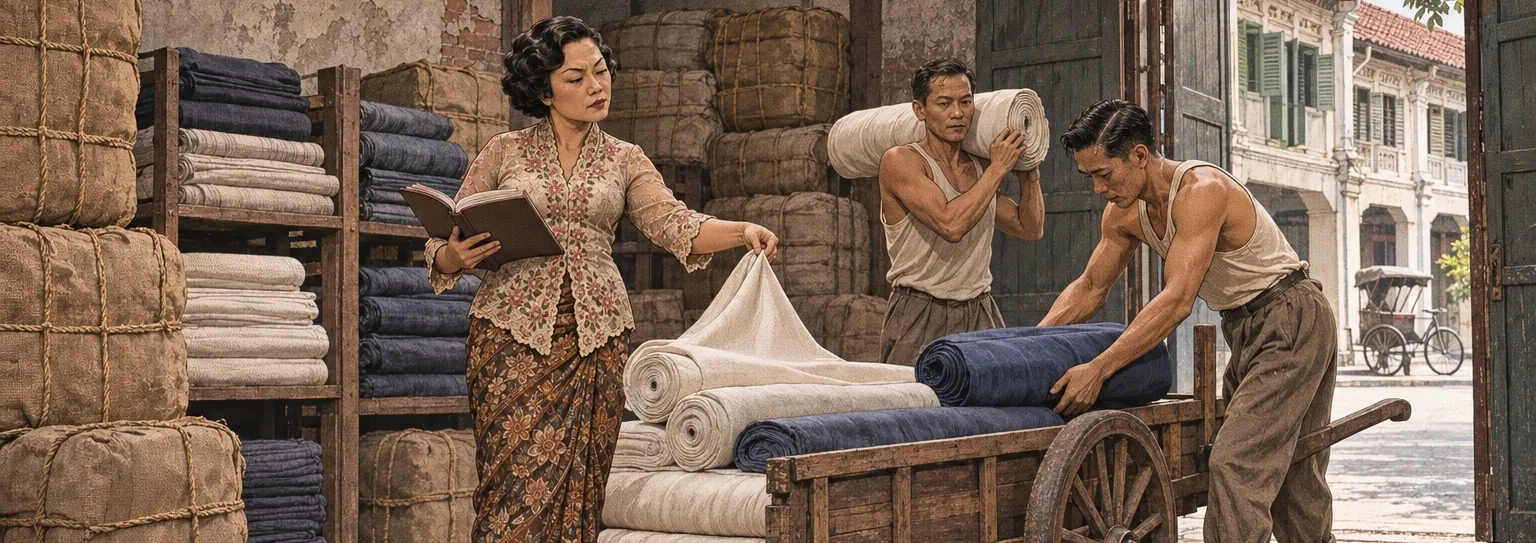
The rest of the firm grew too, at last. Trade was steady in the town, and for the first time since the bust the shelves emptied faster than the godown filled. Only one thing went wrong, and it was the same thing that had gone wrong twice before: a shopkeeper in Katong who had taken goods on credit sold up and went to Kuala Lumpur owing them for six months. Cheng Huat wrote it off without a word. He had stopped expecting anything else.
The Committee
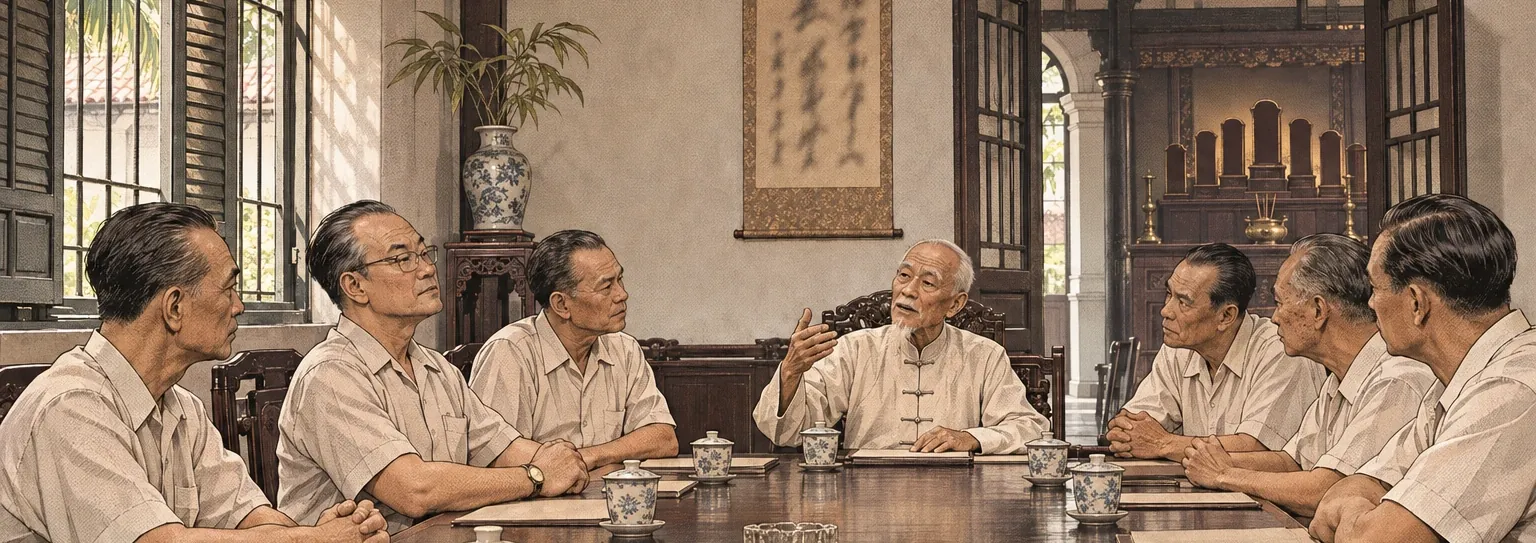
In the spring the clan association asked Cheng Huat onto its committee. It was the old man who had lent him money three times who proposed it, and the others agreed because the Tans had been a name in the association since before the war. He sat at the long table in the association house in a starched shirt, and said very little, and voted with the old man.
He was proud of it in a way he did not show. He was easier at home that year. He and Swee Neo sat on the upstairs veranda in the evenings as they had the year before last, and talked about the school order and the committee, and once, unprompted, he said that she had a better head for the firm than he did. She said that she knew.
Lessons
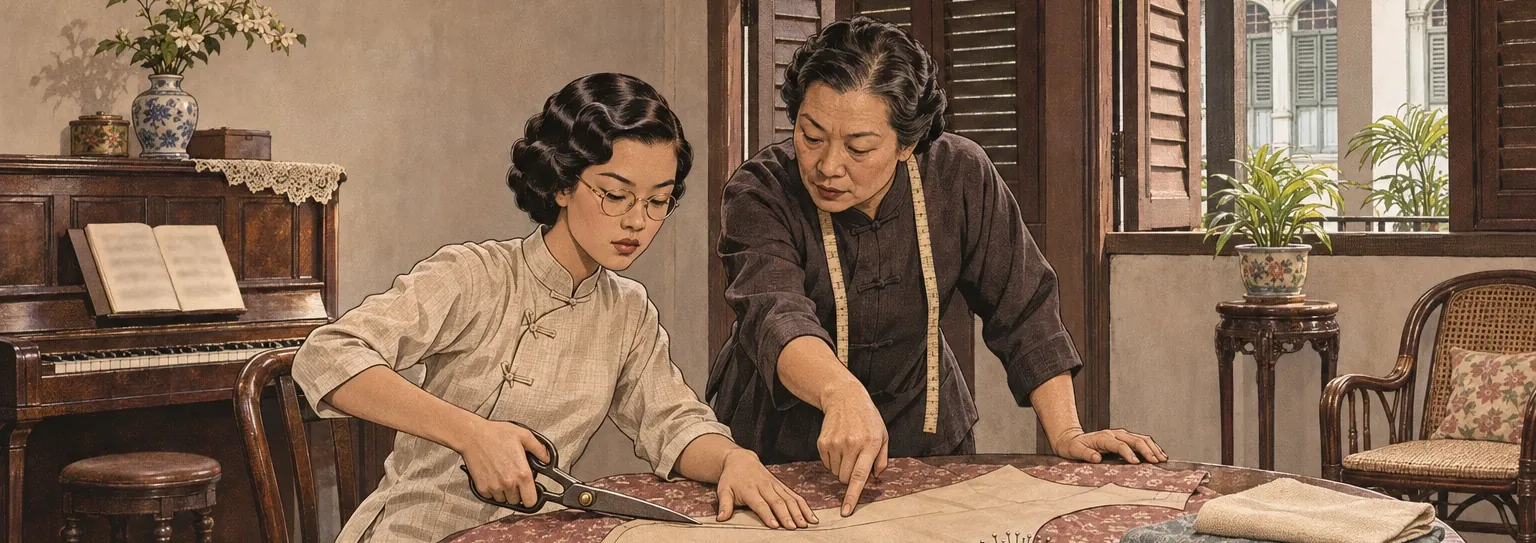
At sixteen she was given the lessons that girls of her kind were given. A woman came to the house on Tuesdays to teach her cutting and sewing properly, from patterns; the cook was told to let her into the kitchen; and the piano lessons that had lapsed when she left school began again, with a different teacher, who was no better. She did them all adequately. None of them was the books.
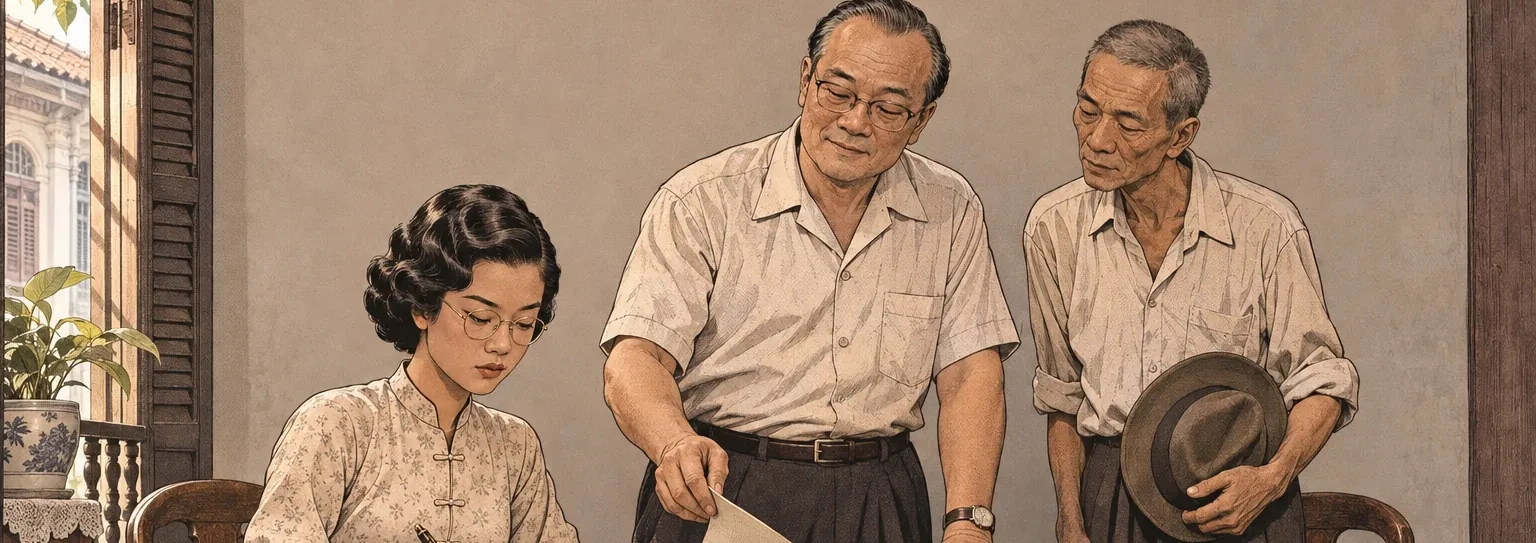
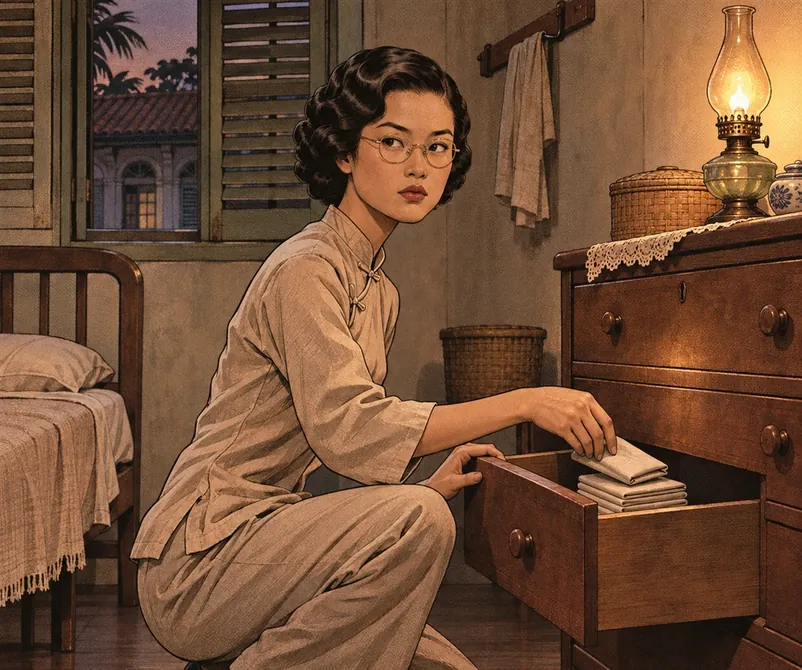
The books she kept as before, at the front-room table, and that year her father, coming in one afternoon while the clerk was there to collect them, turned the pages of the creditors' book for a long time and said in front of the clerk that it was better kept than his own. The clerk agreed. Mei Lin did not look up, and wrote the next line slowly so that her hand would not shake.
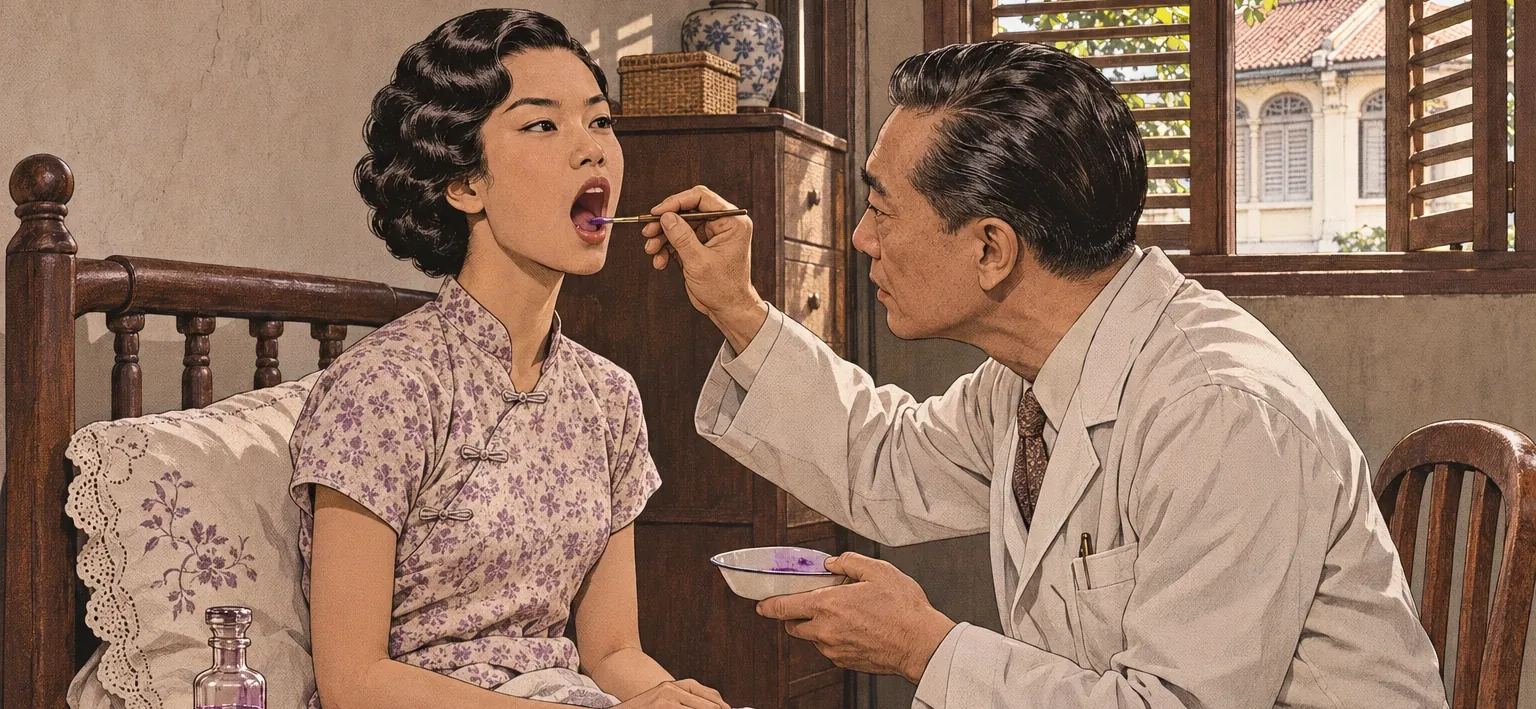
In August she had a bad throat, and the doctor in town came, as he came now whenever anyone in the house was ill, and painted it with something purple, and she was better in a week.
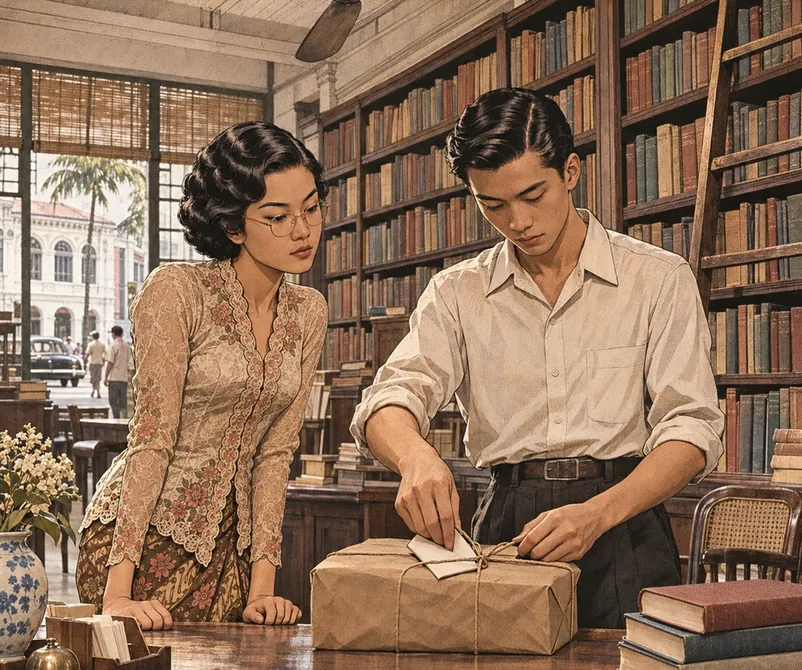
There was a young man at the bookseller's in Raffles Place, an assistant who wrapped her parcels. He began to put in, with the books she had ordered, a list of the new ones that had come from London, written out in his own hand. He was polite and never said anything else. She kept the lists.
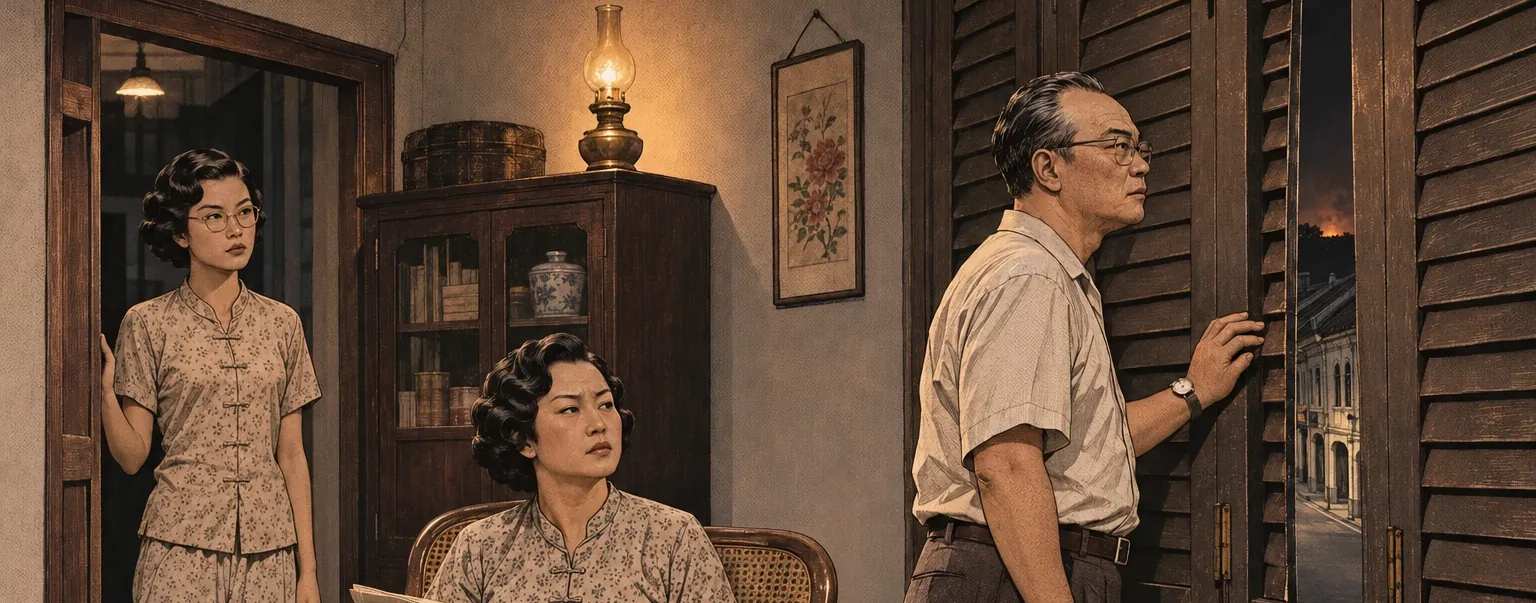
In October the schools were cleared with tear gas and the town burned for three nights. The family stayed indoors under the curfew and the firm shut for two days. None of it came nearer than the newspapers. It was otherwise a quiet year at home.
The bolts of white drill for the school went out of the godown in December, and Mei Lin entered them in the ledger herself, and wrote the name of the school, a school she might once have gone to, in her neatest hand.